How to structure a first visit to Hangzhou
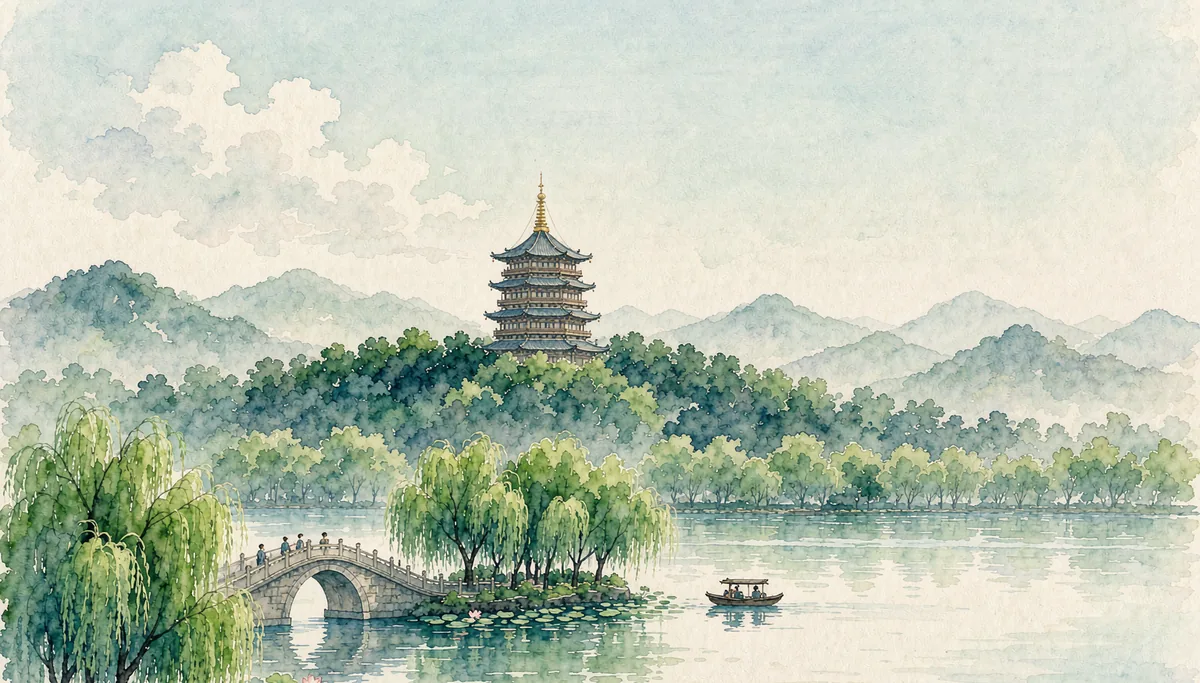
Hangzhou works best as three half-day sectors around West Lake rather than as a single loop: the north shore, the western causeway, and the southern tea hills. The lake is a UNESCO-listed cultural landscape, inscribed in 2011, and its public shoreline is free to walk, but the full circuit is roughly 15 km, so attempting it in one day trades the best views for fatigue. Start with the Broken Bridge and Bai Causeway in the early morning, use a boat or bus to jump between sectors, and keep the late-afternoon light for the Su Causeway or Leifeng Pagoda. Grouping by shore also makes the city readable: the north-east is dense and urban near the metro, the west is green and temple-oriented, and the south leads into tea country. Most first-time visitors need two full days for the lake and Lingyin, plus a third if they want the tea hills, the Grand Canal or a museum without rushing.
Lingyin is free now — but a reservation is compulsory
Since 1 December 2025 the Lingyin Feilaifeng scenic area — including Lingyin Temple, Yongfu Temple and Taoguang Temple — has been free to enter; the previous 45 yuan scenic-area ticket and 30 yuan temple incense ticket, 75 yuan combined, were abolished. Free entry is not walk-in entry. The scenic area uses real-name, time-slot reservations with daily caps of 35,000 visitors on weekdays, 50,000 at weekends and 65,000 on public holidays, split into morning and afternoon slots. Reserve at least one day ahead through the official Lingyin Feilaifeng WeChat or Alipay mini-program; same-day reservations are not accepted, and the passport used for the booking should be carried at the gate. This is the single most common error in older English guides: many still list the abolished ticket prices and almost none mention the reservation requirement or the daily caps. Check the official Hangzhou culture and tourism notice linked below before you fix a date.
Getting there and getting around without a car
Use high-speed rail to arrive and the metro plus buses to move around; driving into the Lingyin area is the option most likely to waste a morning. Shanghai to Hangzhou takes about an hour on the high-speed network, arriving at Hangzhou East or Hangzhou West, and direct long-distance trains also run from Hong Kong West Kowloon (G99/G100, roughly 6 hours 50 minutes). Inside the city, Hangzhou metro gates accept Alipay transport QR codes, and the network covers both main rail stations and the lake's eastern side. Lingyin sits beyond the metro, so the Hangzhou culture and tourism bureau recommends metro-plus-bus connections: Line 19 to Wulian (Exit D) then bus 319M, Lines 1 or 5 to Chengzhan (Exit A) then bus 7, or Line 3 to Dongyue (Exit D) for the Chengxi Park–Lingyin shuttle. On weekends and holidays, 08:00–17:00 odd-even plate restrictions and limited private-car access apply, and self-drivers need a "West Lake Pass" application one day ahead.
What to do after the lake: tea, canals and museums
Spend the second day in the tea hills and canal districts, which are quieter, cheaper and more specific to Hangzhou than another lap of the lake. Longjing village and the surrounding contoured tea rows sit west of the water and are reachable by bus; the China National Tea Museum is free and explains why the pre-Qingming harvest in late March and early April commands the highest prices. Nine Streams (Jiuxi) offers a shaded walking route between tea plots, while the Grand Canal neighbourhoods around Xiaohe Straight Street and the restored Hefang Street area cover architecture, snacks and evening wandering. Xixi National Wetland Park is a half-day boat-and-boardwalk excursion further out, best treated as a separate trip rather than squeezed between lake stops. If rain interrupts the plan, the Hangzhou Museum and the tea museum are both free indoor alternatives that do not require a full day.
Payment, identification and reservations
Set up Alipay or WeChat Pay before arrival, carry your passport, and treat every timed reservation as identity-linked. Hangzhou is close to cashless: metro gates, buses, tea houses, boat piers and small shops generally expect a QR payment, though a card and a small cash reserve remain sensible backups for a first day in China. The same passport used for a Lingyin reservation should be carried at the gate, and hotel check-in requires passport registration at a property licensed to accept foreign guests — confirm this before booking rather than at the desk. Save venue names and your hotel address in Chinese characters for taxi and ride-hailing apps, because English input is unreliable even where signage is bilingual. For entry rules, check our China visa guide: Hangzhou falls within the 240-hour transit visa-free programme and the unilateral visa-free lists that cover many short-stay visitors.
Seasonal planning and pairing Hangzhou with Shanghai
The best windows are late March to May and September to November; avoid the National Day holiday and the plum-rain weeks if your schedule is flexible. Spring brings willow and peach blossom on the causeways plus the first Longjing tea, while autumn brings osmanthus scent, clearer air and comfortable walking temperatures. Mid-June to early July is the humid plum-rain season, July and August are hot, and early October is the year's busiest week with the tightest reservation caps and traffic controls. Hangzhou pairs naturally with Shanghai and Suzhou: all three sit on the same high-speed corridor, so a one- or two-night Hangzhou stop can be added to a Shanghai base without changing your main hotel. Treat this page as a planning framework, and verify current reservation channels, fares, opening hours and holiday controls against the official sources below before finalising a date-specific plan.