China's Metro Networks Explained: How Urban Rail Works for Visitors
China's cities move on rail. At the end of 2024 the country had urban rail transit in 54 cities, 325 lines and 10,945.6 km of track, carrying 32.24 billion passenger trips in a single year. For a visitor this is the most reliable way to cross a large city, and it is worth understanding before you arrive because the payment method and the apps are different from home.
The national scale in official 2024 numbers
At the end of 2024 China operated urban rail transit in 54 cities across 325 lines and 10,945.6 km of track, the first time the network passed 10,000 km. The Ministry of Transport recorded 32.24 billion passenger trips that year, up 9.5 percent from 2023, which means the system is built for everyday mass movement rather than occasional tourist use. For a visitor this matters because the metro is how locals actually travel, and it is fast, frequent and cheap.
The 2024 total included 748 km of new line opened during the year alone, so the map you saw on a previous trip is already out of date. Of the national total, 43 cities run conventional metro or light rail across 267 lines and 9,477.6 km, while the remainder is monorail, maglev, tram and people-mover systems in a smaller set of cities. Plan around the metro, not around taxis, in any city of real size.
| City | Approx. metro length | What the visitor sees |
|---|---|---|
| Shanghai | 906 km (end 2025), 21 lines | World's longest metro; ~10 million rides a day |
| Beijing | 879 km (2024), 29 lines | World's busiest by ridership; deep, frequent lines |
| Guangzhou / Chengdu / Shenzhen | 500–700 km each | Dense core networks with airport links |
| Hangzhou / Nanjing / Wuhan | 400–600 km each | Fast growing, mostly bilingual signage |
Two systems worth separating in your head
The word 'metro' covers several different products. The heavy metro and light rail you will actually use in most big cities run as the 9,477.6 km conventional subset. Separately, a number of cities run monorail (Chongqing), maglev (Shanghai's airport line) or trams, which feel different but are part of the same ticket and signage world. Knowing the line colour and number matters more than the technology underneath.
What unites them is standardisation. Stations use line colours, numbered lines and, in the largest hubs, bilingual Chinese–English signage. The physical metro is also increasingly linked to the national rail network: Shanghai Metro Line 11 physically reaches Kunshan in Jiangsu province, and several metros connect directly to high-speed stations, so a metro ride can be the final leg of an intercity journey.
For visitors, the exotic variants are also the most memorable. Shanghai's maglev to Pudong is the fastest commercial train in the world and doubles as a short experience, while Chongqing's monorail runs through buildings and over the river as a sight in itself. These are still part of the metro family for ticketing and signage, so the same Alipay transit code or single ticket habit applies; they simply look unlike the heavy metro you may expect.
- Metro and light rail are the workhorses; maglev and monorail are the exceptions.
- Line number and colour are your navigation anchors, not the terminal names.
- Metro stations often sit inside or beneath high-speed rail terminals.
- New lines open every year, so check the current map for your travel month.
- Bilingual signage is reliable in tier-one hubs but patchy in smaller cities.
How a foreign visitor actually pays
The simplest method is the transit code inside Alipay or WeChat Pay, which works in most major-city metros once your wallet is verified. You open the transit mini-program, pick the city, and scan the QR code at the gate; the fare is charged to your linked card. This avoids buying a physical card and works across multiple cities with one app, which is why setting up a wallet before you fly is the single most useful preparation.
Where the transit code is not accepted, each city has its own app or a single-journey token from the ticket machine. Shanghai's official app is 'Metro' (Metro Da Jia Hui in pinyin); Beijing uses 'Beijing Subway' and the 'Yikatong' stored-value card. Some cities still sell paper single-ride tickets and rechargeable cards at station machines, and a few sell short tourist passes — Shanghai offers a one-day pass for about RMB 18 and a three-day pass for about RMB 45.
Verify the transit code in a calm moment at your hotel before your first rush-hour trip. A wallet that works for shop payments does not always have the transit feature switched on, and fixing it inside a crowded gate line is stressful.
Reading stations, names and transfers
In the largest hubs, station names appear in Chinese and English, and platform signs show the line colour, the terminal stations and the direction of travel. Transfers between lines happen inside the same paid area, so you rarely exit and re-enter. The practical habit is to note the line number and the terminal in your travel direction, because several lines can share a station with many exits.
Exit choice matters more than visitors expect. A major interchange can have a dozen exits, each serving a different street or landmark, and the wrong one can add a 10-minute walk. Save your destination's nearest exit number, or show the Chinese address to staff at the gate. Free Wi-Fi is limited underground, so download an offline map of the lines you will use.
- Note the line number and terminal, not just the station name.
- Pick the correct exit letter before you surface.
- Allow extra time at interchanges during morning and evening peaks.
- Keep a screenshot of the route; signal is weak in deep stations.
- Staff at the gate can confirm the right exit for an address.
Where the metro changes your trip
Metros connect directly to the airports in most large cities, which is usually cheaper and more predictable than a taxi during a traffic jam. Beijing links both Capital and Daxing airports by rail-and-metro combinations, Shanghai runs the maglev and Metro Line 2 to Pudong, and Guangzhou's metro reaches Baiyun. Budget the airport leg as a normal metro ride rather than a separate, expensive transfer.
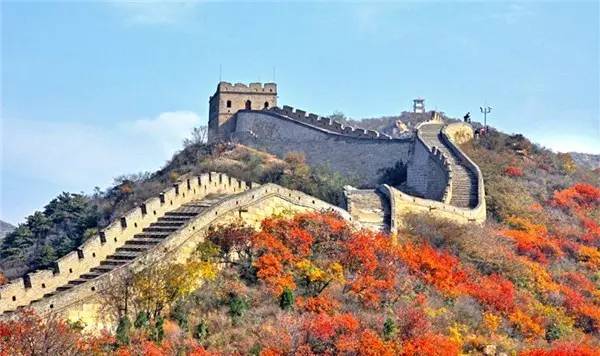
The network also unlocks day trips that would otherwise need a car. Suburban metro and regional lines reach water towns near Shanghai, the Great Wall at Badaling from Beijing, and university and temple districts in Chengdu and Xi'an. Because the fare is low and frequency is high, the metro lets you treat a city as a set of neighbourhoods rather than one hotel base.
| Trip leg | Metro-friendly answer | Why |
|---|---|---|
| City centre to airport | Metro or airport rail link | Fixed time, avoids road traffic |
| Hotel to attraction | Metro to the nearest exit | Cheaper and faster than taxi at peak |
| Day trip to suburb | Suburban or regional line | Low fare, high frequency |
| Late return | Check last-train time | Metros stop around 22:30–23:30 |
The limits you should plan around
Metros are dense in cities but absent in the countryside, so a scenic site an hour from the last station still needs a road transfer. Within cities, the system is busiest between roughly 07:30–09:30 and 17:30–19:30, when cars are full and platforms crowded; build buffer time if you are catching a train or a flight afterwards. Services also end surprisingly early, commonly around 22:30 to 23:30, after which only taxis and ride-hailing remain.
Step-free access is better than many expect in the largest hubs, where lifts and tactile paving are standard, but it is not universal at older or smaller stations, so travellers with heavy luggage or mobility needs should check the lift locations on the official line map before setting out. Building the first and last 200 metres of a trip around a known lift makes a crowded interchange far less stressful.
Finally, the metro is a mass system, not a sightseeing ride, so large luggage can be awkward in a packed car and at narrow gates. For a normal city day it is unbeatable; for a group with suitcases moving between stations, a fixed-price transfer can be the calmer choice. Use the metro for movement, and keep a taxi option for the heavy-luggage legs.
Frequently asked questions
How many Chinese cities have a metro?
At the end of 2024, 54 cities operated urban rail transit across 325 lines and 10,945.6 km of track, carrying 32.24 billion passenger trips that year. The largest systems are Shanghai, at about 906 km, and Beijing, at about 879 km, but dozens of other cities run substantial networks too.
Can a foreign visitor use Alipay or WeChat for the metro?
In most major cities, yes. Alipay and WeChat Pay each have a transit code that scans at the gate and charges your linked card, and it works across multiple cities in one app. Where it is not accepted, use the city's own metro app or a single-journey token from a station machine.
Is metro signage in English?
In the largest hubs, station names, line colours and direction signs are bilingual Chinese–English, and the official apps have English interfaces. In smaller cities English can be patchy, so save your destination's exit number and keep a screenshot of the route before you travel underground.
Are there metro day passes for tourists?
It varies by city. Shanghai sells a one-day pass for about RMB 18 and a three-day pass for about RMB 45, while Beijing relies on single tickets or the stored-value Yikatong card rather than day passes. Check the specific city before you arrive rather than assuming one national pass exists.
Do China's metros connect to the airports?
Yes, in most large cities. Beijing links both Capital and Daxing airports by rail-and-metro routes, Shanghai uses the maglev and Metro Line 2 to Pudong, and Guangzhou's metro reaches Baiyun. Treat the airport leg as a normal metro ride, which is usually cheaper and more reliable than a taxi in traffic.