2 Weeks in China: Three Itinerary Options Compared (2026)
Two weeks is the point where a first trip can hold a fourth region — but only if you accept one flight and one extra travel day. This guide compares three realistic fourteen-day shapes: the classic rail corridor with more depth, the same route plus Chengdu, and a southern scenery route through Guilin and Zhangjiajie. Each is workable; they optimise different things.
What two weeks actually buys you
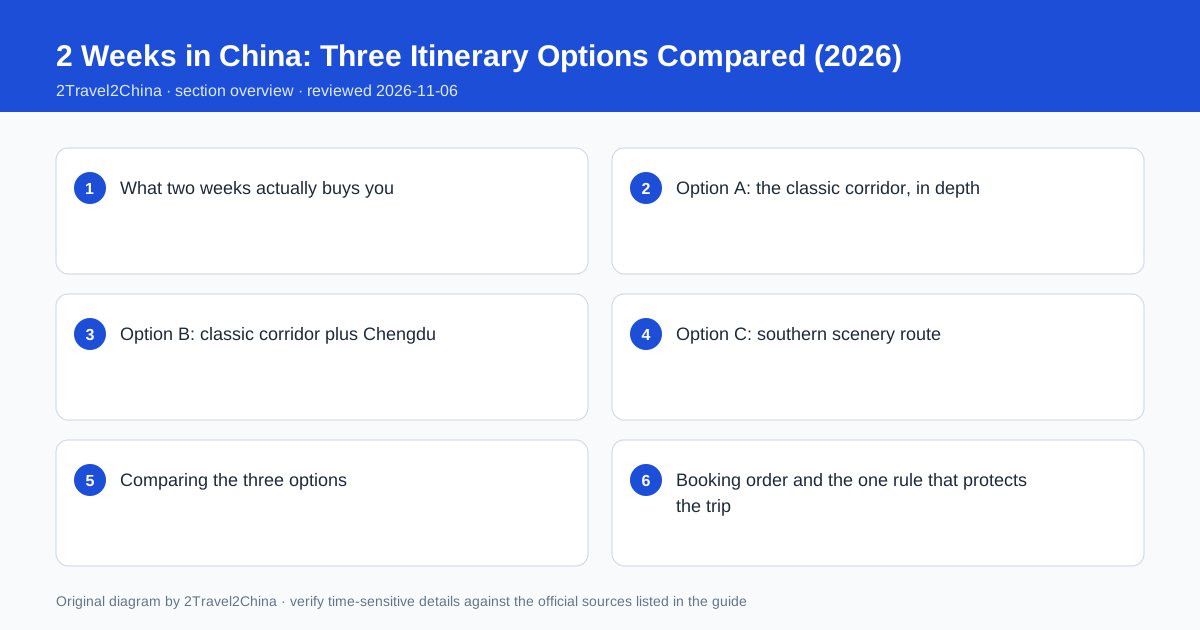
A fourteen-day trip has roughly eleven or twelve usable days after arrival, departure and transfers. Compared with ten days, that buys about three additional full days. Those three days can either deepen the existing cities — more museums, a second Great Wall section, a water town — or add one more region. It cannot do both. The most common two-week mistake is spending the extra days on a fourth city while keeping the same rushed pace in the first three.
| Allocation | What the extra days buy | Cost |
|---|---|---|
| Three cities, deeper | More museums, day trips, a genuinely free day | No extra transfer |
| Four cities, one flight | A different landscape and cuisine | One travel day plus a flight |
| Two regions, slow | Real depth in the north and the delta | Fewer place names |
| Five cities | Nothing — the pace collapses | Three or four transfers |
Decide what the trip is for before choosing. A traveller who wants to understand imperial and modern China is better served by three cities in depth. A traveller whose main motivation is pandas, karst scenery or a specific landscape should spend the extra days on that region and accept one flight. Both are legitimate; mixing them produces a schedule rather than a trip.
Option A: the classic corridor, in depth
Beijing, Xi’an and Shanghai with four or five nights each is the lowest-risk two-week itinerary. No flight is needed, all transfers are on well-served rail, and the extra days go into the sites that a ten-day trip has to skip: a second Beijing museum, the Summer Palace, a full day in Suzhou or Hangzhou, and a genuinely free day that absorbs weather and fatigue.
- Days 1–5: Beijing — Forbidden City, Great Wall, Temple of Heaven, Summer Palace, one museum
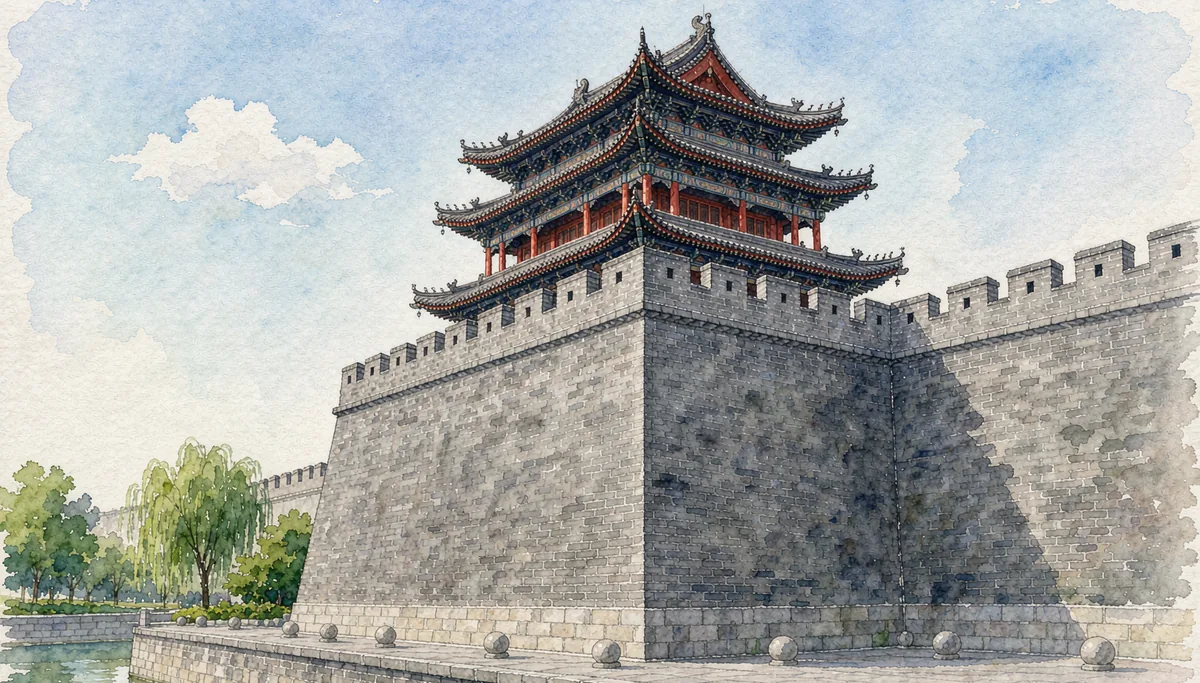
- Day 6: rail to Xi’an; evening city-wall walk
- Days 7–8: Terracotta Army, Shaanxi History Museum, city wall, old quarter
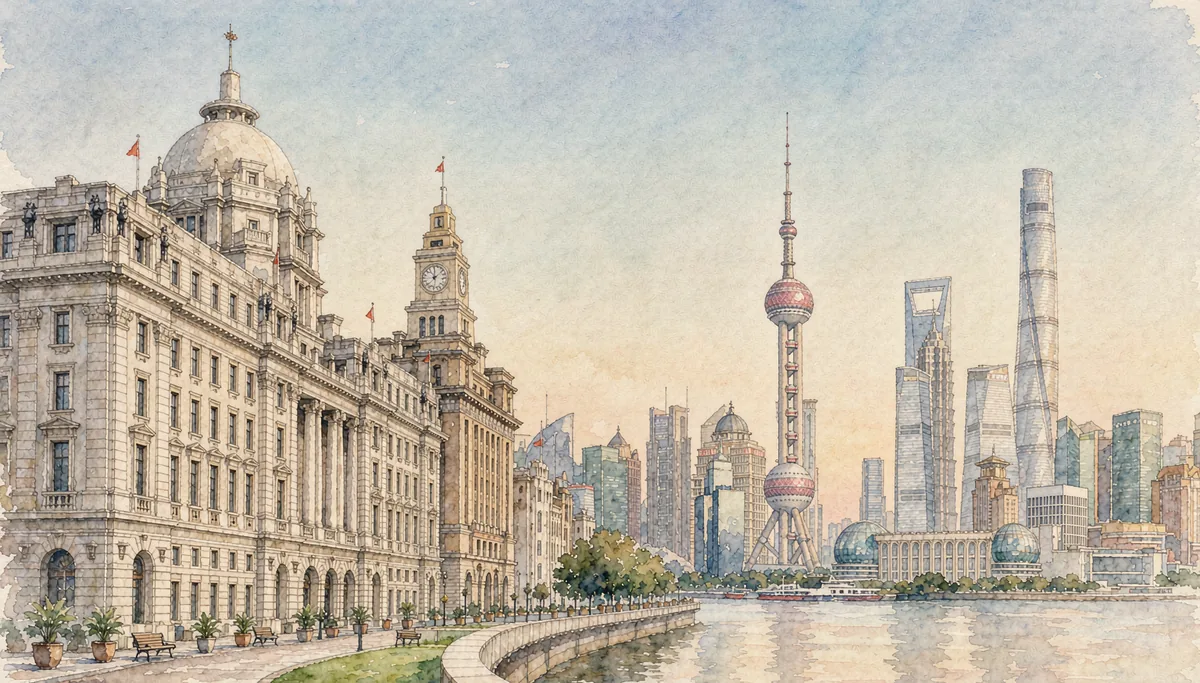
- Day 9: rail to Shanghai; evening Bund walk
- Days 10–13: Shanghai, a Suzhou or Hangzhou day trip, a flexible day
- Day 14: slow morning and international departure
The free day is not a placeholder. It is where a delayed train, a rain-closed cableway or a site that deserves a second visit goes. A two-week itinerary with no unassigned day is usually a sign that too much was planned. This option also fits a 240-hour transit entry less well than a single-region route, so check the entry route for your passport and itinerary shape first.
Option B: classic corridor plus Chengdu
Adding Chengdu gives a first trip a completely different register: pandas, Sichuan food, teahouse culture and a slower city rhythm. The cost is one long rail leg or a flight and one travel day. The cleanest shape is Beijing → Xi’an → Chengdu → Shanghai, with the Chengdu to Shanghai leg flown, or Beijing → Chengdu → Xi’an → Shanghai if the timetable suits.
| Leg | Suggested mode | Note |
|---|---|---|
| Beijing → Xi’an | High-speed rail | Half-day journey, central stations |
| Xi’an → Chengdu | High-speed rail | Mountain route, book early |
| Chengdu → Shanghai | Flight | Long cross-country leg |
| Shanghai → departure | No extra leg | Keep the international gateway as the final base |
| Alternative | Fly home via Chengdu | Check whether the ticket allows an open-jaw route |
Give Chengdu at least three nights. Two nights with a flight on either side leaves one usable day, which is enough for the panda base and little else. An open-jaw international ticket — into Beijing, out of Shanghai or Chengdu — removes a backtrack and is worth checking when booking. If the ticket is a round trip into one city, add the return leg and drop a day elsewhere rather than squeezing it in.
Option C: southern scenery route
A southern route trades imperial history for landscape: Shanghai, Guilin and Yangshuo, Zhangjiajie, and possibly Chengdu or Chongqing. Guilin’s karst rivers and Zhangjiajie’s sandstone pillars are unlike anything on the classic corridor, and they photograph exactly as expected. The trade-off is more internal flights and longer transfers between scenic areas, because the sites themselves sit outside city centres.
- Days 1–3: Shanghai — arrival, the Bund, one museum, a neighbourhood day
- Day 4: fly to Guilin; transfer towards Yangshuo
- Days 5–6: Li River, karst scenery, cycling or a boat trip
- Day 7: travel to Zhangjiajie
- Days 8–10: Wulingyuan pillars, Tianmen Mountain, a flexible weather day
- Days 11–13: Chengdu or Chongqing, or return to Shanghai for a slower finish
- Day 14: international departure
Weather matters much more here than on the classic corridor: mist, low cloud and heavy rain can change what a viewpoint looks like or close a cableway. Keep at least one spare day in the scenic section, and do not place an international flight immediately after a domestic flight from a mountain gateway. The route is rewarding but less forgiving than option A.
Comparing the three options
The right choice depends on what you are willing to trade. Option A minimises transfers and risk. Option B adds one distinctive city and one flight. Option C maximises landscape variety at the cost of more internal travel and greater weather sensitivity. None is "the best two weeks in China"; they are three different answers to the same number of days.
| Criterion | A: classic in depth | B: plus Chengdu | C: southern scenery |
|---|---|---|---|
| Internal flights | None | One | Two or three |
| Travel days | Two | Three | Three or four |
| Weather sensitivity | Low | Low | Higher |
| First-trip risk | Lowest | Moderate | Moderate to high |
| Best for | History and museums | Food, pandas, contrast | Landscape and photography |
For a first trip with no strong preference, option A remains the recommendation — not because the others are worse, but because depth is the scarce resource on a first visit. A second trip can add Chengdu or Guilin with a much better sense of what the traveller actually enjoys.
Booking order and the one rule that protects the trip
Settle the entry route, the international ticket shape and the two wallets first. Then book hotels that can register a foreign passport, timed-entry slots for the headline sites, and the rail legs with the exact passport name in 12306. Leave any domestic flight until the rail timetable is known, so the mode choice is made on door-to-door time rather than on habit.
Fix the international ticket
Prefer an open-jaw route into one city and out of another.
Settle entry and payments
Visa-free, transit or L visa; two wallets verified at home.
Book hotels and timed entries
Confirm foreign-passport registration at each property.
Book rail at release
Exact passport name in 12306; add standby if a route is tight.
Add a flight only where it wins
Compare door-to-door time, including airport process.
The one rule that protects every version of this itinerary: never place a domestic flight or a long rail leg immediately before the international departure. Give the final night to the departure city. A two-week trip has enough slack to absorb that night; a one-day delay on a domestic leg should not be able to cancel the flight home.
Rail timetables, flight routes, ticket-release windows and venue booking systems change seasonally. Confirm current services on 12306 and with the airline before fixing the day order, and verify the entry route for your passport against the National Immigration Administration notice in force on your travel date.
Frequently asked questions
Is two weeks enough for four cities in China?
Yes, if the fourth city is added with one flight and one full travel day, and the other cities keep at least three nights each. Five cities in two weeks is where the pace usually collapses.
Which two-week route is best for a first trip?
For most first-timers, Beijing, Xi’an and Shanghai in depth: no internal flights, well-served rail, and extra days for museums, day trips and a genuinely free day.
Should I add Chengdu or Guilin to a two-week itinerary?
Chengdu adds pandas and Sichuan food with one flight; Guilin and Zhangjiajie add landscape but need more internal travel and a weather buffer. Choose based on what you actually want to see.
What is an open-jaw ticket and does it help?
It means flying into one city and out of another, such as into Beijing and out of Shanghai. It removes a backtrack and saves a full travel day on a multi-city route.
Where should I put the final night?
In the international departure city. Never place a domestic flight or a long rail leg immediately before the flight home, so a one-day domestic delay cannot cancel the intercontinental connection.