Suzhou

Classical gardens, canal lanes and pingtan teahouses — the easiest high-speed-rail day trip from Shanghai

By Chloe Zao, Cities & Itineraries Editor at 2Travel2China

Planning window
March to May, September to November
Common languages
Mandarin Chinese; Suzhou dialect widely spoken locally
Currency
Chinese Yuan (CNY)
Guide verified
Suzhou city view

Independently edited

Plan a thoughtful visit to Suzhou

Practical context for first-time international visitors. Verify time-sensitive rules with the official links below.

How to structure a first visit to Suzhou

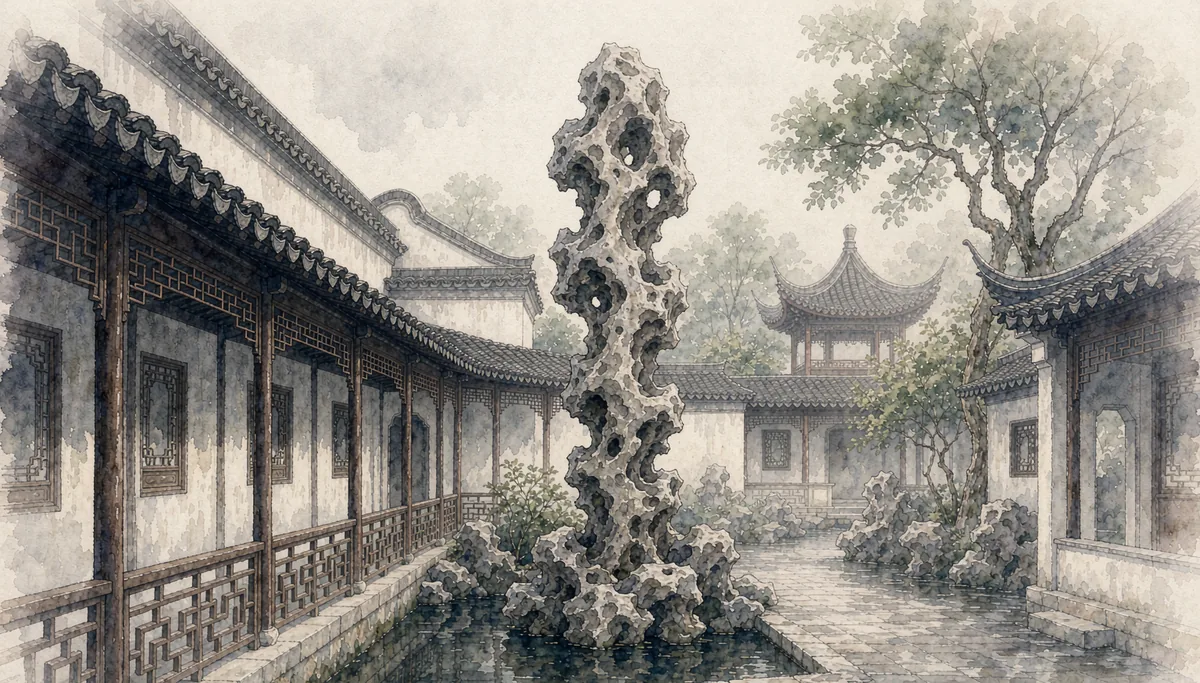
Choose one major garden for the early morning, a second, smaller garden after lunch, and leave the late afternoon for free canal streets. Suzhou's gardens are comparative experiences: the Humble Administrator's Garden is broad, water-centred and built around borrowed views, while the Lingering Garden is compact and built around a single celebrated Taihu rock and a covered zigzag corridor. Seeing them in that order makes the design language legible. Three ticketed gardens in one day is the classic first-timer mistake — the pavilions blur together and the timed-entry slots force rushed visits. Two full days lets you add Tiger Hill, the Suzhou Museum and an evening pingtan teahouse without compressing anything.

Reservations are the real gate, not the ticket price

Suzhou's headline gardens use real-name, time-slot reservations through official garden channels, and popular morning slots sell out in peak weeks. Reserve at least one day ahead through the official garden WeChat or the city's visitor platform, and carry the identity document used for the booking. Standard adult admission is around ¥70 for the Humble Administrator's Garden in the low season and ¥80 in peak, ¥45 and ¥55 for the Lingering Garden, and ¥60 and ¥70 for Tiger Hill, with half-price concessions for students and many older visitors. The Suzhou Museum is free but requires an advance reservation and closes on Mondays. Prices above are published bands, not live quotes; always confirm on the official channel before paying a reseller.

Getting there: which station matters

From Shanghai, high-speed rail takes roughly 25 to 35 minutes to Suzhou Station, which sits immediately north of the old town and is the correct arrival point for the gardens. Suzhou North station is also served by high-speed trains but lies well outside the centre and adds a metro transfer of half an hour or more; check the station name on your ticket before booking. Suzhou also connects directly to Hangzhou, Nanjing and Beijing on the same corridor. Inside the city, the metro covers the main stations, the museum quarter and the canal districts, and the flat old town is easy to walk. Use Alipay transport QR codes for metro gates and save destination names in Chinese for ride-hailing apps.

What the gardens are actually doing

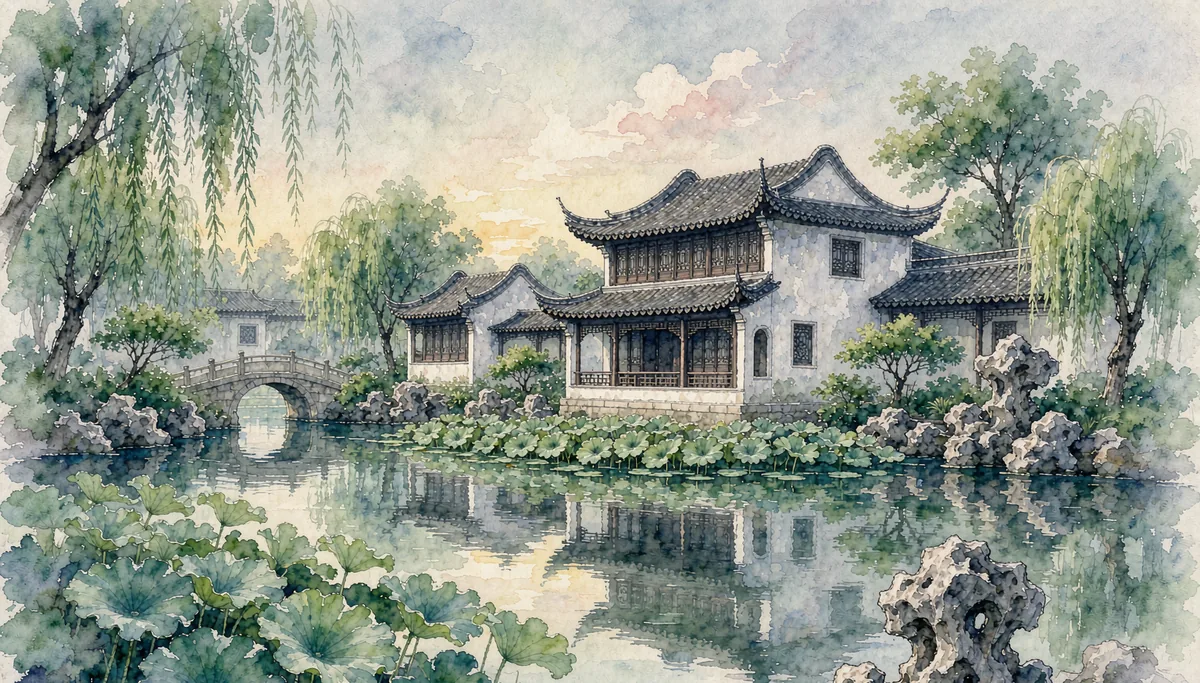
A Suzhou garden is a compressed landscape, not a flower bed. Walls screen the city, water creates depth, perforated Taihu limestone stands in for mountains, and covered corridors control the sequence in which views appear. At the Humble Administrator's Garden, the central pond and the distant borrowed view of a pagoda demonstrate the technique at scale. At the Lingering Garden, the Guanyun Peak rock and the long dark-timber corridor show how a small courtyard can feel like a journey. Reading the gardens this way makes a second visit far more rewarding than collecting named pavilions, and it explains why midday crowds are the main enemy: the design depends on pauses and framed views rather than on a continuous walking route.

Free Suzhou: canals, museums and the evening layer

The best-value hours in Suzhou cost nothing. Pingjiang Road follows a canal through whitewashed houses and small teahouses, Shantang Street runs beside another canal toward Tiger Hill, and both are open at any hour. The Suzhou Museum, designed by I. M. Pei, is free with a compulsory reservation and is closed on Mondays; book it well ahead because its daily quota is smaller than the gardens'. In the evening, a pingtan teahouse offers short sung storytelling in the local dialect, usually with Chinese-only signage but no language barrier to simply listening. Boat rides on the canals and the night garden performance at the Master of the Nets Garden are optional paid extras, not the core experience.

Season, crowds and practical details

Late March to May and September to November are the most comfortable windows, with blossom in spring and osmanthus scent in autumn; they are also the busiest for reservations. June brings the humid plum-rain period, July and August are hot, and the first week of October is the year's peak with the tightest crowd controls. Winter is damp and quiet, and a misty garden can be the most atmospheric version of the city if you dress for it. Wear shoes with grip: stone paving, mossy steps and small bridges get slippery in rain. Set up Alipay or WeChat Pay before arrival, keep your passport for hotel registration and ticket checks, and confirm your hotel is licensed to accept foreign guests.
A day-by-day itinerary for Suzhou

A realistic structure for a first visit. Adjust the order to match opening days, weather and your own pace — fewer sights done well beats a checklist.

Day 1

The water garden, the museum and Pingjiang Road

Take an early high-speed train from Shanghai to Suzhou Station, then go straight to a pre-booked morning slot at the Humble Administrator's Garden. Arriving near opening time gives you the central pond, the lotus courts and the borrowed pagoda view with far fewer people in the framed compositions. Allow two hours and walk slowly: the garden is designed as a sequence of reveals, and the eastern and western sections are easy to skip if the crowds build. Keep the identity document used for the reservation to hand at the gate.

Walk to the Suzhou Museum for a pre-booked afternoon entry, or use the time to compare prices at the nearby garden shops if the museum quota is full. The museum is free, modern and a useful counterpoint to the Ming garden next door, but it closes on Mondays, so check the calendar before fixing the day. Finish on Pingjiang Road, where the canal-side lanes, teahouses and small snack shops stay lively into the evening and cost nothing to explore. A pingtan performance after dinner is the most distinctive optional extra.

  • Book both the garden and the museum before travelling
  • Suzhou Station is the correct arrival point, not Suzhou North
  • Pingjiang Road and its canal lanes are free and open late
Day 2

Rocks, corridors, Tiger Hill and Shantang Street

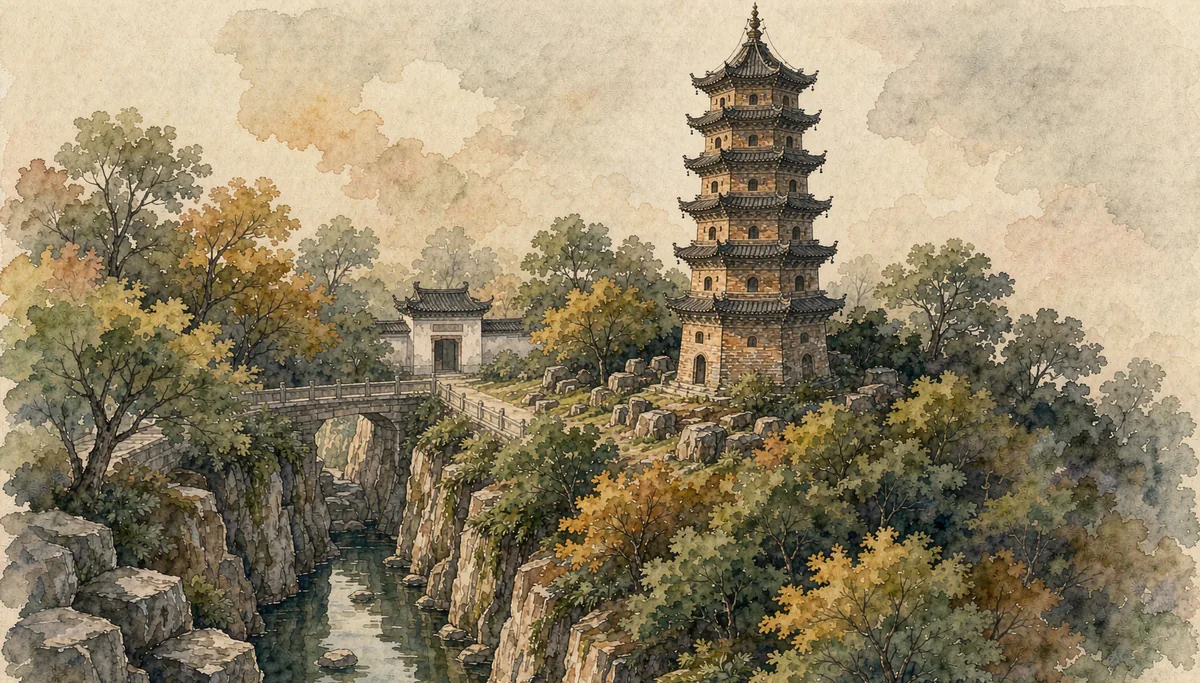
Start at the Lingering Garden, which is smaller, quieter and more detail-oriented than the first day's garden. Spend time on the Guanyun Peak Taihu rock and the long covered corridor rather than hurrying through the halls; these are the features that explain the UNESCO listing. Then take a short bus or taxi to Tiger Hill for the leaning Yunyan Pagoda and the narrow, mossy Sword Pool ravine below it. The two sites pair well because one is a study in controlled interior space and the other is an open hillside with the city's oldest landmark silhouette.

Return toward the centre along Shantang Street, a restored canal-side street that is free to walk and especially pleasant near dusk. A short boat ride is available if you want the water-level view, but the street itself is the better experience and needs no ticket. If you are returning to Shanghai, take an evening train from Suzhou Station; if you are continuing to Hangzhou or Nanjing, confirm the departure station on the ticket because the city has several. Leave a buffer for the walk or metro ride to the station.

  • Two gardens across two days beat three gardens in one
  • Tiger Hill and the Lingering Garden share a short transfer
  • Shantang Street is free; canal boats are an optional extra
Day 3

A slower day or a Hangzhou extension

Use a third day either to slow down in Suzhou or to move along the same rail corridor. In the city, the Master of the Nets Garden is the best small garden for a repeat visit, the silk and embroidery museums give a rain-proof afternoon, and a longer Grand Canal walk shows the commercial city behind the scholar gardens. A third day also lets you revisit a favourite garden at a different hour, which is how these spaces reveal their design: morning and late-afternoon light change the water reflections completely.

Alternatively, take a morning high-speed train to Hangzhou and keep Shanghai as your base for the whole loop. Suzhou and Hangzhou are both short rail rides from Shanghai, so an overnight in either is optional rather than required. Check the 240-hour transit visa-free rules and the list of eligible ports in our China visa guide before assuming a multi-city route is permitted. Whatever you choose, re-confirm garden reservation slots and museum closures on the official channels, because holiday crowd controls can change a day plan at short notice.

  • The Master of the Nets Garden is the best small repeat visit
  • Suzhou and Hangzhou both pair with a Shanghai base by rail
  • Re-check holiday crowd controls and Monday closures

Where to stay

  • The old town near Pingjiang Road and Guanqian Street is the best first-time base: the major gardens, the Suzhou Museum and the canal lanes are all within walking distance or a short taxi ride, and the evening streets stay lively. Small courtyard hotels here are atmospheric but often have narrow stairs and no lift.
  • Around Suzhou Station suits travellers arriving late or leaving early, with business hotels and direct metro access. It is less charming than the canal districts but removes the stress of a morning transfer, and it is the right choice for a one-night stop built around a single garden reservation.
  • The Shantang Street and Shilu area puts you closer to the Lingering Garden and Tiger Hill and gives easy evening walking along a canal. It is a good compromise for a second night if you plan to see the western sights without crossing the old town twice.
  • Confirm that the property is registered to accept foreign guests before booking — not every small guesthouse in the old town is — and keep your passport for registration at check-in. Save the hotel name and address in Chinese characters for taxi and ride-hailing apps, where English input is unreliable.
  • Book ahead for late March to May and September to November, and avoid the first week of October if possible: garden time slots and museum quotas tighten at exactly the same time as room rates rise. Winter stays are cheaper and the gardens are strikingly quiet.

Budget notes

  • Suzhou is inexpensive by Shanghai standards. The headline gardens sit in a published band of roughly ¥45–80 per adult depending on the site and the season, half-price concessions are common, and the Suzhou Museum is free with a reservation. Two ticketed gardens plus Tiger Hill is a modest day's admission spend.
  • The free layer is substantial: Pingjiang Road, Shantang Street, Guanqian Street, the canal-side walks and most museum permanent collections cost nothing. Canal boat rides, night garden performances and guided commentary are optional extras, not requirements, and are best bought at official counters rather than from street sellers.
  • Rail is the biggest variable in a day-trip budget. A Shanghai–Suzhou high-speed ticket is a small fraction of a Shanghai hotel night, which is why staying in Shanghai and commuting is often cheaper than moving hotels — but check that your ticket says Suzhou Station, since a Suzhou North arrival adds a long metro transfer.
  • Meals run roughly ¥15–35 for noodles, dumplings or a local breakfast and ¥60–150 per person for a sit-down Suzhou dinner, which is sweeter and more delicate than Hunan or Sichuan cooking. Teahouse seats for pingtan vary widely; ask for the price before sitting down, and do not assume the tea is included.
  • Mid-range rooms in the old town are commonly ¥250–600 outside peak weeks, with courtyard boutiques higher and station business hotels lower. Peak spring and autumn weekends and the October holiday push rates up sharply, so book a cancellable rate and re-check the garden reservation window at the same time.

Suzhou travel questions

Can Suzhou be done as a day trip from Shanghai?

Yes. High-speed rail from Shanghai to Suzhou Station takes roughly 25 to 35 minutes, and one major garden plus a canal district fits comfortably in a day. An overnight is better value if you want two gardens, the Suzhou Museum and an evening teahouse. Check that your ticket says Suzhou Station, not Suzhou North, which is far from the old town.

Do I need to book Suzhou gardens in advance?

Yes for the headline gardens. They use real-name, time-slot reservations through official garden channels, and popular morning slots sell out in spring and autumn. Reserve at least one day ahead and carry the identity document used for the booking. The Suzhou Museum is free but also requires an advance reservation and closes on Mondays.

How much are the main Suzhou garden tickets?

Published adult bands are roughly ¥70 low season and ¥80 peak for the Humble Administrator's Garden, ¥45 and ¥55 for the Lingering Garden, and ¥60 and ¥70 for Tiger Hill, with common half-price concessions. These are price bands, not live quotes — confirm the current figure on the official garden channel before paying a reseller.

Which two Suzhou gardens should a first-timer choose?

Choose the Humble Administrator's Garden for its large water-centred design and borrowed views, and the Lingering Garden for its celebrated perforated Taihu rock and covered corridor. They demonstrate opposite approaches to the same problem. Add the smaller Master of the Nets Garden only on a second or third day, when you can appreciate the details.

What is free to do in Suzhou?

Pingjiang Road, Shantang Street, Guanqian Street and the canal-side walks are free and open at any hour, and the Suzhou Museum is free with a compulsory reservation. These streets and the museum give a full afternoon and evening without a ticket. Canal boats, night garden shows and guided commentary are optional paid extras.

Key places and realistic planning notes

No placeholder ratings or universal ticket claims—each note is specific to the named place.

Humble Administrator's Garden

Humble Administrator's Garden

The largest classical garden in Suzhou, built around water, pavilions and borrowed scenery

Planning estimate
Allow about two hours in an early morning slot
Admission note
Around ¥70 low season / ¥80 peak; real-name timed reservation required
Area
North-east old town, beside the Suzhou Museum
Lingering Garden

Lingering Garden

A UNESCO-listed garden famous for its perforated Taihu rock and covered corridors

Planning estimate
Allow 60–90 minutes; pair with Tiger Hill
Admission note
Around ¥45 low season / ¥55 peak; timed reservation recommended
Area
West of the old town near Shantang Street
Tiger Hill & Yunyan Pagoda

Tiger Hill & Yunyan Pagoda

A leaning octagonal brick pagoda above the Sword Pool on the city's north-west edge

Planning estimate
Allow a half-day including the transfer
Admission note
Around ¥60 low season / ¥70 peak; canal boat optional
Area
North-west edge of Suzhou, linked to Shantang Street by canal

Before you go

  • Reserve garden time slots and the free museum quota ahead
  • Confirm your train arrives at Suzhou Station
  • Avoid Monday for the Suzhou Museum
  • Carry the identity document used for reservations

Getting around

  • Metro with Alipay transport QR codes
  • High-speed rail to Suzhou Station
  • Walking and short taxis inside the flat old town
  • Canal boats on Shantang Street and Pingjiang Road

Local foods to explore

  • Suzhou-style sweet braised pork
  • Squirrel-shaped mandarin fish
  • Biluochun green tea from nearby Dongting hills
  • Osmanthus rice cakes and seasonal mooncakes
  • Aozao noodles and delicate soup dumplings

Official sources and updates

Opening hours, booking rules, transport and weather can change. Check these first-party sources before travel.

Editorial review date: . Report corrections through our contact page.

Explore Suzhou on the map

Map data © OpenStreetMap contributors. Confirm entrances and live routing independently.