Business Etiquette in China: Meetings, Cards and Relationships
Business in China runs on relationships as much as contracts, so the early part of any engagement is about establishing trust rather than closing terms. The rituals that matter are exchanging name cards correctly, respecting hierarchy and seating, and protecting everyone's dignity in the room. This guide explains the habits that shape a meeting or banquet without turning them into a script you must memorise.
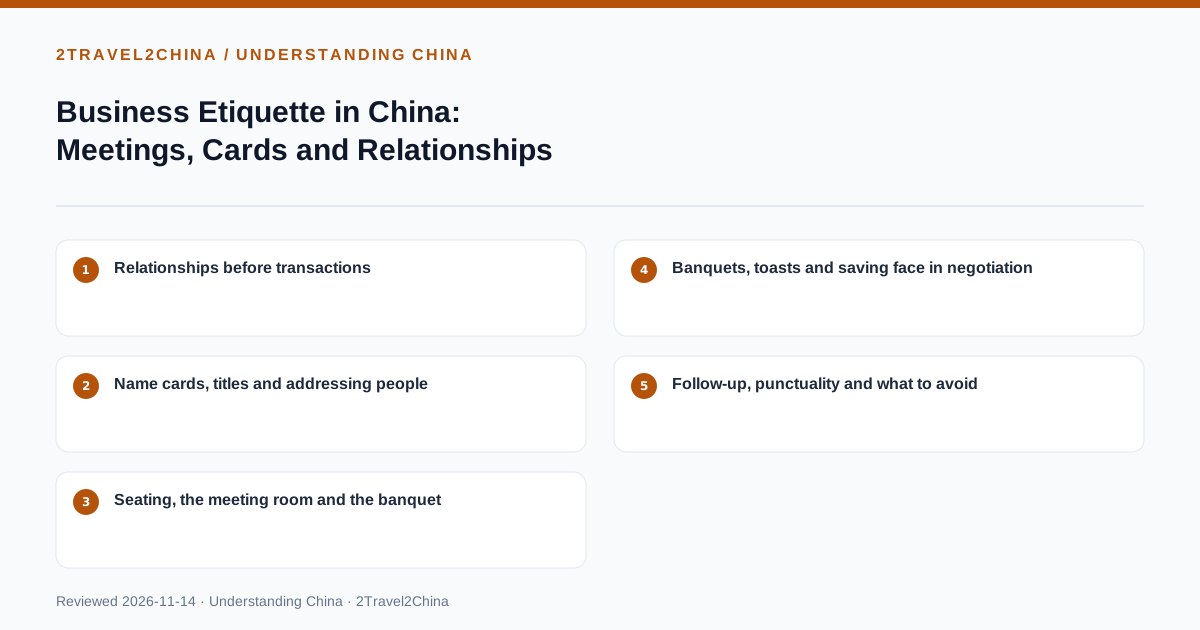
Relationships before transactions
The concept usually called guanxi describes the network of mutual obligation and favours that supports business and social life, and it means the first meetings often focus on knowing the people rather than signing the deal. Small talk, shared meals and repeated contact build the trust that later makes agreements smoother. Visitors who rush straight to terms can seem blunt, even when the substance is sound.
You are not expected to build a guanxi network as an outsider, but understanding that relationships precede transactions explains a lot of pacing. Accept invitations, show interest in the people, and let the host set the speed. A patient first meeting that ends without a decision is normal, not a failure, and the relationship is the asset being built.
Chinese business culture typically builds the relationship before the deal, so the first meetings may feel like conversations rather than negotiations, and that is by design. Expect questions about your background, your company and your interests, and reciprocate; sharing a little personal context is normal and helps trust. Patience here pays off, because a counterpart who feels they know you is far more likely to move quickly once talks begin.
Do not mistake a friendly, indirect first meeting for a lack of seriousness. Decisions are often made after the room, among senior people, and the warm-up is part of due diligence on you as a partner, not just your proposal.
Name cards, titles and addressing people
Business cards are exchanged at the start of a meeting, and doing it well is a visible courtesy. Offer and receive the card with both hands, take a moment to read it, and keep it on the table during the meeting rather than pocketing it at once. Have a card with a Chinese side if you can, because titles and organisations carry weight in how people place you.
Address people by their surname and professional title, such as Director Wang or Professor Chen, rather than a first name, because rank is read from titles and age. The most senior person enters a room and is seated first, and decisions often flow from them even in a group setting. Matching this formality shows respect for the hierarchy without requiring you to perform it perfectly.
The business card, mingpian, is treated with respect: present and receive it with both hands, read it on receipt, and place it on the table in front of you during the meeting rather than pocketing it at once. Address people by their surname and full title, and when several titles apply, use the most senior. If you have cards printed, add Chinese on one side, because a bilingual card signals preparation and respect.
- Present and receive cards with both hands, text facing the recipient
- Read the card briefly before setting it down neatly
- Use the highest relevant title when addressing someone
- Print a bilingual card with Chinese on one side if you can
- Never write on, fold or casually stuff away a received card
Seating, the meeting room and the banquet
At a formal meeting or banquet, seating is deliberate: the principal guest sits near the host, often facing the door, while others arrange by rank outward from that pair. The seat facing the entrance is usually the host's or the most honoured, so wait to be directed rather than choosing freely. Once seated, the practical rule is simply to follow the most senior person's lead.
- Wait to be seated rather than choosing your own chair.
- The door-facing seat is usually the host's or most honoured.
- The guest of honour sits near the host.
- Follow the senior person's lead on when to begin.
- At a banquet, dishes are shared and the host usually orders and pays.
Seating follows hierarchy, and the host will usually indicate where you sit, so wait to be shown rather than choosing freely. The principal guest often faces the door, and the most senior local sits opposite or at the head; walking in and claiming a seat can unintentionally offend. In the meeting room, let the senior local open the agenda, and keep your phone face-down and silent, because checking it mid-discussion reads as disengagement.
If you are hosting rather than being hosted, the same logic reverses: you choose and pay for the venue, you indicate seats, and you open the conversation before getting to business. Booking a private room, baoxiang, at a restaurant signals respect for the group and gives you control of the seating and the pace. Confirm numbers and dietary needs in advance, because a host who notices a vegetarian guest or an allergy is seen as attentive rather than merely efficient.
Banquets, toasts and saving face in negotiation
A business banquet is often where the real relationship is built, and the host typically orders and pays, so do not grab the bill. Toasts, often a group ganbei meaning dry the glass, are common, and a non-drinking guest can raise tea or water without apology. The serious point underneath is face: avoid open contradiction, criticise privately, and let the other side agree without being cornered in front of colleagues.
Negotiation may feel indirect, with a vague answer standing in for a polite no, because a blunt refusal costs both sides face. Push gently, leave room to revisit, and confirm understandings in writing afterwards so nothing rests on a single ambiguous moment. A patient, courteous style that protects everyone's dignity is read as professional, not slow.
The banquet is where much relationship work happens, and toasting, ganbei, is central: you clink glasses, usually lowering yours slightly below a senior’s, and take at least a sip. You are not obliged to empty the glass each time, despite the ritual pressure, and non-drinkers can toast with tea while joining the gesture. Save face by praising the host’s choice of restaurant or dish, and avoid negotiating hard or contradicting a senior openly at the table.
If you do not drink alcohol, say so early and cheerfully, then toast with tea throughout. No one is obliged to drink, and a gracious non-drinker who joins every toast is better received than a reluctant one who refuses each round.
Follow-up, punctuality and what to avoid
Arrive on time or a few minutes early, because lateness without notice reads as disrespect, and confirm the meeting format and who will attend in advance. After the meeting, a brief thank-you message and any promised material sent promptly keep the relationship warm. Avoid public criticism, loud confrontation, and gifts that break the cultural taboos covered in our gift-giving guide.
These are common patterns, not legal rules, and younger firms in China's big cities operate with Western informality. The card exchange, the two-hand courtesy, and the protection of face are the habits that travel across regions; beyond those, follow your host. When unsure, mirror what the most senior local person does.
Follow-up is expected: a short thank-you message after the meeting, a clear summary of any agreed next steps, and patience if responses are slower than you expect, because consensus-building takes time internally. Be punctual to the minute for every appointment, and avoid openly criticising a counterpart, losing your temper, or promising what you cannot deliver, because all three damage face and trust at once. Consistency over visits builds the relationship that later shortcuts the paperwork.
- Open criticism or losing your temper in front of others
- Promising outcomes you cannot guarantee
- Casual lateness to any appointment
- Ignoring seniority in seating, toasts or speaking order
- Treating the first meeting as a transaction rather than a relationship
Frequently asked questions
How should I exchange business cards in China?
Offer and receive the card with both hands, read it briefly, and keep it on the table during the meeting rather than pocketing it at once. A card with a Chinese side helps, because titles and organisations carry weight. This small ritual signals respect and is noticed more than visitors expect, so it is worth getting right.
Does seating order matter at a Chinese business banquet?
Yes, at formal settings. The seat facing the door is usually the host's or the most honoured, the guest of honour sits near the host, and others arrange by rank outward. Wait to be directed rather than choosing freely, and follow the most senior person's lead on when to begin. Casual meals are far more relaxed about this.
What is guanxi and do I need it as a visitor?
Guanxi is the web of mutual obligation and favours that supports business and social life, which is why early meetings build trust before terms. You are not expected to build a full network as an outsider, but understanding that relationships precede transactions explains the pacing. Accept invitations and let the host set the speed.
Is it rude to refuse alcohol at a business dinner?
No. A clear, polite no is accepted, and a non-drinking guest can raise a glass of tea or water for toasts without apology. What matters is joining the gesture, not the alcohol. Avoid openly correcting or cornering anyone in front of colleagues, because protecting face is the deeper rule at a Chinese banquet.
Why does negotiation feel indirect in China?
Because a blunt refusal can cause both sides to lose face, a vague answer often stands in for a polite no, and decisions may be confirmed in writing later. Push gently, leave room to revisit, and avoid public contradiction. A patient, courteous style that protects everyone's dignity reads as professional rather than evasive.