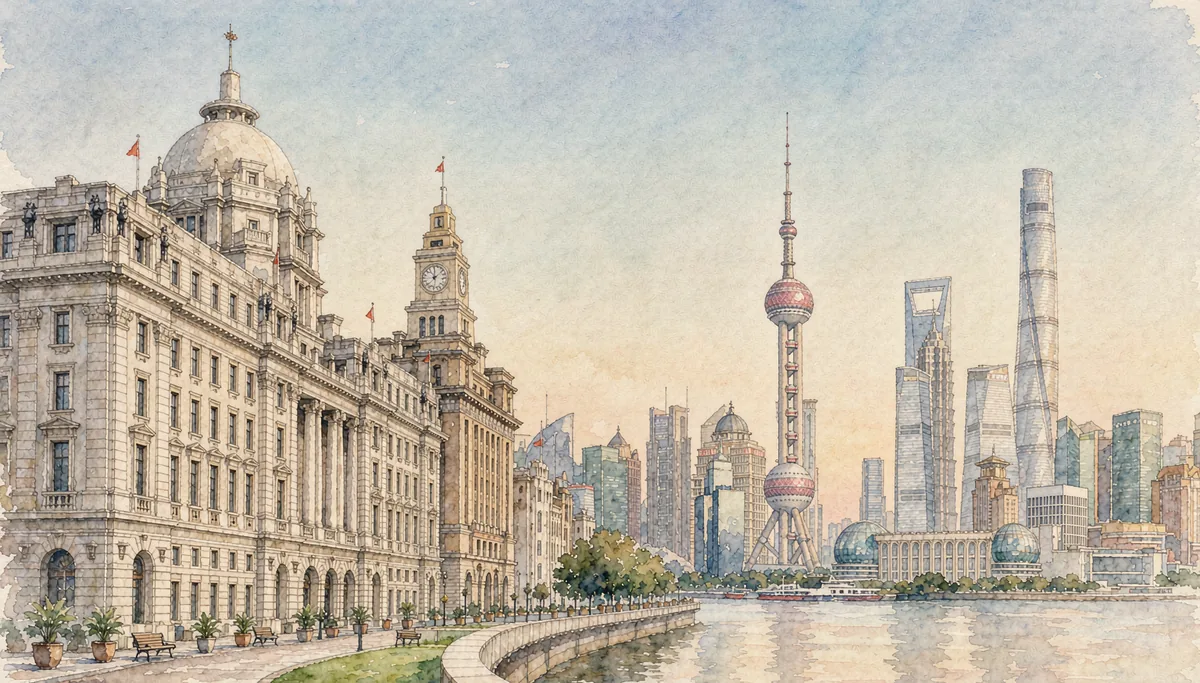
China Travel Budget: Real Daily Costs by Category (2026)
A realistic daily budget for China in 2026 runs ¥250–450 for budget travel, ¥700–1,200 for mid-range comfort, and ¥2,000–4,000 for luxury, per person, covering accommodation, food, local transport and attractions but excluding international flights and intercity travel. Exchange rate is about ¥7.2 to one US dollar. The biggest lever on your total is accommodation, which alone makes up 35–50 percent of a typical day's spend.
How much does a trip to China cost per day in 2026
A solo traveler in China in 2026 spends roughly ¥250–450 per day on a budget, ¥700–1,200 at mid-range comfort, and ¥2,000–4,000 for luxury, per person. Those figures cover accommodation, food, in-city transport and attraction entry, but exclude two big items: the international flight to China and travel between cities (high-speed rail or domestic flights). At the early-2026 exchange rate of about ¥7.2 to the US dollar, the mid-range tier works out to roughly US$97–167 per day.
The spread between tiers is wider than in many destinations because the experience that makes China memorable — the Great Wall, the Forbidden City, street food, temples, night markets — is also the cheap part. Where you trade money for comfort is almost always the hotel, not the sightseeing. A first-time visitor on a two-week trip can therefore land almost anywhere in that range depending on three decisions: where you sleep, how you move between cities, and whether you book private guides.
Daily budget by travel style: budget, mid-range, comfortable
The table below breaks the three tiers into the four cost categories that make up a normal day. These are per-person daily averages in major cities (Beijing, Shanghai, Chengdu, Xi'an); smaller cities and rural areas typically run 15–30 percent cheaper, and Hong Kong costs significantly more across every line. International flights and intercity rail or flights are excluded on every row.
| Tier | Accommodation | Food & drink | Local transport | Attractions | Total per day |
|---|---|---|---|---|---|
| Budget | ¥80–150 (hostel dorm / budget hotel) | ¥50–100 | ¥15–30 | ¥0–80 | ¥250–450 (US$35–62) |
| Mid-range | ¥350–700 (3-star hotel) | ¥150–300 | ¥40–80 | ¥80–200 | ¥700–1,200 (US$97–167) |
| Comfortable | ¥800–3,000+ (4–5 star) | ¥300–600 | ¥80–160 | ¥200–400 | ¥2,000–4,000 (US$278–555) |
All yuan-to-dollar conversions in this guide use about ¥7.2 per US dollar, the central parity rate published by the People's Bank of China in early 2026. The yuan fluctuates, so treat dollar figures as a rough mental shorthand rather than a fixed price.
Accommodation: the single biggest line item
Accommodation is 35–50 percent of a typical China day, and it is the one category where small upgrades move the total most. A hostel dorm bed runs ¥60–120 per night in first-tier cities and ¥30–60 in smaller ones. A private budget-hotel room is ¥150–350. A clean, well-located three-star hotel is ¥350–700, a four-star ¥700–1,500, and international five-star brands ¥1,500–4,000 or more.
- Hostel dorm (8–12 beds): ¥60–120 in Beijing and Shanghai, ¥30–60 elsewhere.
- Budget / 2-star private room: ¥150–350, often with breakfast and free WiFi.
- 3-star hotel: ¥350–700, the reliable sweet spot for most first-time visitors.
- 4-star hotel: ¥700–1,500, frequently better value than a Western equivalent.
- 5-star international brand: ¥1,500–4,000+, competitive against global city rates.
Prices spike 50–100 percent during Golden Week (early October) and Chinese New Year. If your dates overlap either, book months ahead or shift the trip — a ¥500 room in September can be ¥1,200 in the first week of October.
Food and drink: where China's value shows
Food is the category where China most rewards the willing. A full bowl of hand-pulled noodles or a dumpling set at a local shop costs ¥15–40. A three-dish meal shared between two at a mid-range restaurant runs ¥60–150. A single street-food item is ¥5–20. Even a proper hot-pot dinner is only ¥80–200 per person. The worst value in the country is the hotel breakfast buffet at ¥100–180 — the noodle shop outside the door does better for ¥15.
- Street food and market snacks: ¥5–20 (jianbing crepe, baozi bun, skewers).
- Local noodle or dumpling shop: ¥15–40 for a full meal.
- Mid-range Chinese restaurant: ¥60–150 for two people sharing dishes.
- Hot pot (mid-range): ¥80–200 per person with drinks.
- Local draft beer ¥8–20 at restaurants, ¥3–8 at convenience stores; a Luckin Coffee latte ¥9–16.
The most reliable price signal in any Chinese city: if there is an English menu in the window, expect tourist pricing; if the stools are plastic and nobody speaks English, the food is usually excellent and about half the price. Eating like a local is the single biggest daily saving after the hotel.
Getting around the city: metro, DiDi and bikes
In-city transport is cheap and the easiest category to keep small. A single metro ride is ¥2–10 by distance, a DiDi trip across town is ¥15–50, and a shared bike is ¥1–2 per 30 minutes. A solo day on metro plus walking costs ¥15–60; with several DiDi rides ¥80–180; a private car and driver for the day runs ¥500–800 — a luxury, not a necessity, except for out-of-town sites like the Mutianyu Great Wall.
- Metro single ride: ¥2–10 — the default for every city day.
- DiDi city ride: ¥15–50, far cheaper than Western ride-hailing and always preferred over street taxis.
- Shared bike: ¥1–2 per 30 minutes for the last kilometer.
- Airport express trains: ¥20–40 where available, cheaper than a taxi.
Between cities: high-speed rail beats flying
For journeys under about 1,000 kilometers, China's high-speed rail is cheaper and faster door-to-door than flying once you add airport transfer and security time. Sample second-class fares from the official China Railway (12306) system in 2026: Beijing to Shanghai is ¥553 for about 4 hours 18 minutes, Beijing to Xi'an about ¥515 for 4 hours 15 minutes, Shanghai to Hangzhou ¥75 for roughly an hour, and Guilin to Yangshuo ¥20–30.
| Route | 2nd-class fare | Typical time | Source |
|---|---|---|---|
| Beijing ↔ Shanghai | ¥553 | ~4h 18m | China Railway (12306) |
| Beijing ↔ Xi'an | ¥515 | ~4h 15m | China Railway (12306) |
| Shanghai ↔ Hangzhou | ¥75 | ~1h | China Railway (12306) |
| Guilin ↔ Yangshuo | ¥20–30 | ~0.5h | China Railway (12306) |
Fares vary by train number and date, so treat these as planning anchors and confirm on 12306. Foreign visitors can now book with a passport on the 12306 app and website in English — our high-speed train booking guide walks through the passport verification and 60-day booking window step by step.
Attraction tickets: the official 2026 prices
China prices its national attractions low by global standards, and entry fees rarely break a budget — a full day of major sightseeing seldom exceeds US$35 in tickets. The Forbidden City is ¥60 in peak season and ¥40 off-peak, the Terracotta Army ¥120, Badaling Great Wall ¥40, the Chengdu Panda Base ¥55, and the Zhangjiajie four-day park pass about ¥225. Several headline sights, including West Lake in Hangzhou and the Bund in Shanghai, are free.
| Attraction | City | 2026 ticket (peak) | Official source |
|---|---|---|---|
| Forbidden City (Palace Museum) | Beijing | ¥60 (¥40 off-peak) | intl.dpm.org.cn |
| Great Wall — Badaling | Beijing | ¥40 (¥35 off-peak) | english.beijing.gov.cn |
| Great Wall — Mutianyu | Beijing | ¥45 | mutianyugreatwall.com |
| Terracotta Army | Xi'an | ¥120 | bmy.com.cn |
| Chengdu Panda Base | Chengdu | ¥55 | Official WeChat |
| Summer Palace | Beijing | ¥30 (¥20 off-peak) | summerpalace.net.cn |
| Zhangjiajie National Park | Zhangjiajie | ¥225 (4-day pass) | Park official |
| Yu Garden | Shanghai | ¥40 (¥30 off-peak) | yugarden.com.cn |
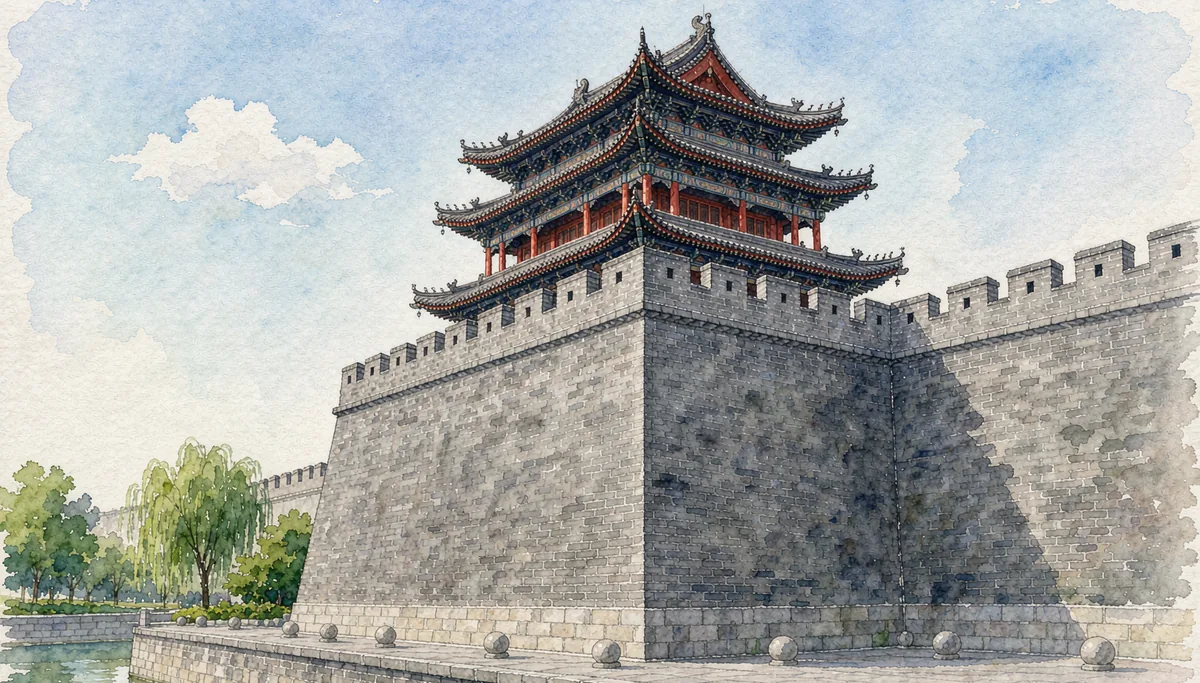
| Xi'an City Wall | Xi'an | ¥54 | Official WeChat |
| West Lake | Hangzhou | Free | — |
Two caveats on the sticker price. First, most major sites now require real-name online booking in advance (the Forbidden City releases tickets 7 days ahead and sells out daily in peak season) — book through the official WeChat channel or Trip.com with your passport number ready. Second, budget an extra ¥50–150 per major site for internal add-ons: cable cars, shuttle buses, lifts and the glass bridge that sit between you and the actual highlight.
Why Beijing and Shanghai cost more than the rest
First-tier cities run 30–50 percent above second-tier ones for lodging, and the gap flows through the whole budget. A mid-range three-star hotel is ¥400–850 in Beijing and ¥450–900 in Shanghai, but ¥250–550 in Chengdu, ¥220–500 in Xi'an, ¥180–400 in Kunming, and just ¥160–350 in a town like Pingyao. Food and taxis are 20–40 percent cheaper outside the top two cities, so a trip built around Chengdu, Xi'an and Guilin is noticeably cheaper than one centered on Beijing and Shanghai.
| City | Mid-range hotel / night (¥) | Relative cost |
|---|---|---|
| Beijing | ¥400–850 | Highest |
| Shanghai | ¥450–900 | Highest |
| Chengdu | ¥250–550 | Lower |
| Xi'an | ¥220–500 | Lower |
| Kunming | ¥180–400 | Low |
| Pingyao | ¥160–350 | Lowest |
Worked examples: one week and two weeks
Numbers land better as a total. A seven-day mid-range trip based in one city (Beijing) for one person, with minimal intercity travel, comes to roughly ¥4,900–8,400 (US$680–1,170): about ¥2,450–4,900 for seven nights of three-star lodging, ¥1,050–2,100 for food, ¥280–560 for local transport, and ¥400–1,200 for attractions. A 14-day trip across Beijing, Xi'an and Shanghai adds intercity rail of about ¥1,100–1,400 and pushes the total to roughly ¥9,500–17,000 (US$1,320–2,360).
- 7 days, one city (mid-range): ¥4,900–8,400 per person, flights excluded.
- 14 days, three cities (mid-range): ¥9,500–17,000 per person including ~¥1,100–1,400 rail.
- Budget versions of either: subtract roughly 40–55 percent by using hostels and street food.
- Luxury versions: double or triple the lodging and dining lines.
Money-saving strategies that actually work
The levers that move a China budget are few and consistent. Eat where locals eat (no English menu, plastic stools), ride the metro instead of DiDi for everyday trips, book high-speed rail a week or two ahead, travel in shoulder season (April–May, September–October) rather than Golden Week, and skip the hotel breakfast for a ¥15 noodle shop. Carrying both Alipay and WeChat Pay also lets you split larger purchases into sub-¥200 charges to avoid the 3 percent foreign-card fee.
- Eat local: the single biggest daily saving after the hotel.
- Use metro and walking for city days; reserve DiDi for late or rainy trips.
- Book high-speed rail and popular attractions 7–14 days ahead.
- Avoid Golden Week and Chinese New Year, when prices double.
- Carry both wallets and split big purchases under ¥200 to dodge the 3% fee.
- Spend a night or two in lower-cost cities (Chengdu, Xi'an, Pingyao).
How to pay and carry money in China
Set up Alipay and WeChat Pay before you fly, linking the Visa or Mastercard you already carry — most vendors no longer accept foreign cards or keep cash change, so a phone that pays is the backbone of the whole budget. Keep ¥200–500 in small notes as a backup for rural stalls and a dead battery, and expect an exchange rate near ¥7.2 to the US dollar in early 2026. Cards alone do not work at most shops and restaurants.
- Install Alipay and WeChat Pay at home; bind your international card and complete passport verification.
- Carry ¥200–500 in small notes as a backup to mobile payments.
- Exchange a little yuan before departure or at an airport bank counter.
- Notify your bank of travel dates so China charges are not flagged as fraud.
Both wallets are near-universal in cities and major tourist sites but not literally everywhere, and a flat battery is always possible. Our Alipay guide and WeChat Pay guide cover the exact setup, the ¥200 fee threshold and the 90-day waiver so the payment layer of your budget behaves as planned.
Frequently asked questions
How much money do I need per day in China?
Budget travelers spend about ¥250–450 per day, mid-range visitors ¥700–1,200, and luxury travelers ¥2,000–4,000, per person. Those figures cover accommodation, food, local transport and attractions but exclude international flights and travel between cities. At the early-2026 rate of about ¥7.2 to the US dollar, mid-range works out to roughly US$97–167 daily.
Is China expensive compared with Europe or the United States?
No. China offers strong value against Western Europe, Japan or Australia. Street meals cost ¥5–20, metro rides ¥2–10, and mid-range hotels run 30–50 percent below comparable European properties. The main costs that approach Western levels are international flights, private guiding, and five-star international hotels during holiday peaks.
Do I still need cash in China in 2026?
You need only a small amount. Alipay and WeChat Pay cover nearly every city and tourist-site merchant once you bind a Visa or Mastercard, but rural family-run shops, some market stalls and a dead phone battery still call for cash. Carry ¥200–500 in small notes as a backup, and exchange a little before you land or at an airport counter.
How much is a China visa in 2026?
Following a 2026 fee reduction valid through 31 December, a US citizen pays US$140 for the standard ten-year multiple-entry L visa, down from US$185, and UK applicants pay £64, £128 or £191 by type. Travelers from the 50 visa-free countries and 240-hour transit visitors pay nothing. Check the exact fee for your nationality before applying.
What are the hidden costs travelers forget?
Four items surprise first-timers: a 3 percent fee on purchases above ¥200 when paying with a foreign card through Alipay or WeChat (waived 90 days for new WeChat binders in 2026); the visa fee; connectivity at US$15–40 for an eSIM or local SIM; and travel insurance at US$20–50 per week. The visa line is zero for visa-free and transit travelers.
How much should I budget for trains between cities?
High-speed rail is cheap for the distance covered. Official 12306 second-class fares in 2026 are about ¥553 for Beijing to Shanghai (4h18m), ¥515 for Beijing to Xi'an (4h15m), ¥75 for Shanghai to Hangzhou (1h), and ¥20–30 for Guilin to Yangshuo. Fares vary by train and date, so confirm on 12306 and book a week or two ahead.