Zhangjiajie

Wulingyuan's quartz-sandstone pillars, Tianmen Mountain and the glass bridge — China's most vertical landscape

By Chloe Zao, Cities & Itineraries Editor at 2Travel2China

Planning window
April to June, September to November
Common languages
Mandarin Chinese
Currency
Chinese Yuan (CNY)
Guide verified
Zhangjiajie city view

Independently edited

Plan a thoughtful visit to Zhangjiajie

Practical context for first-time international visitors. Verify time-sensitive rules with the official links below.

How many days Zhangjiajie actually needs

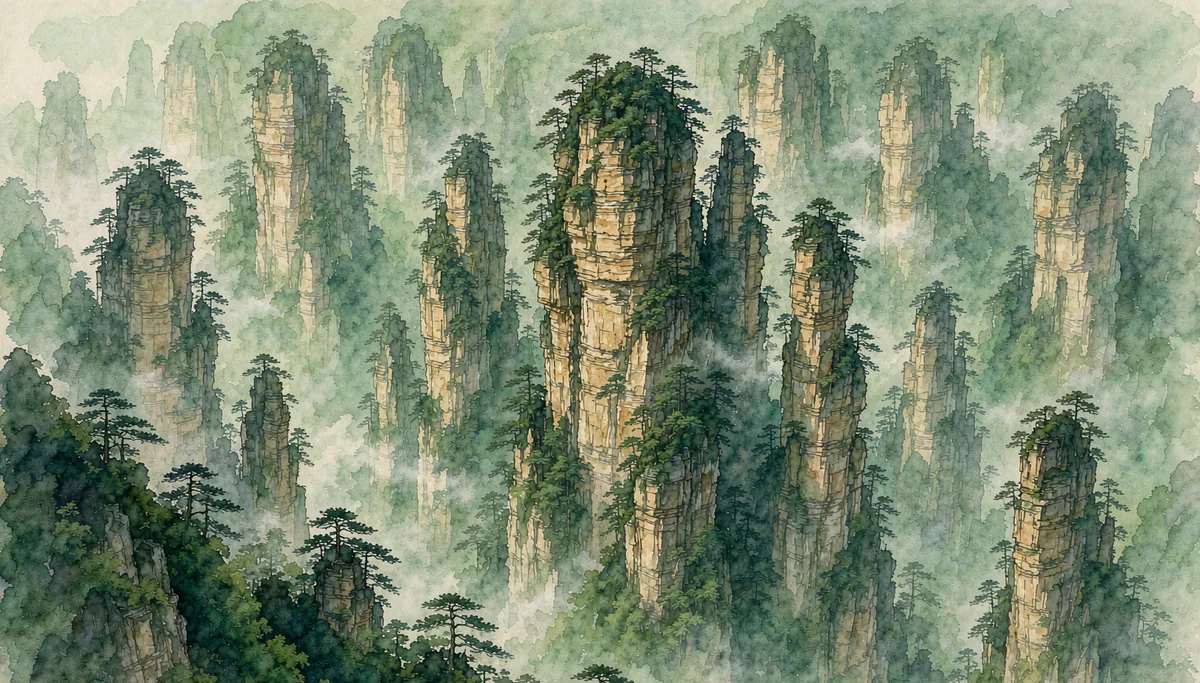
Plan four days: three inside Wulingyuan and one for Tianmen Mountain or the Grand Canyon Glass Bridge. The core-area pass is valid for four consecutive days precisely because the park is too large to see in one circuit, and the internal shuttle buses link separate sectors rather than a single loop. A typical split is Yuanjiajie and the Bailong Elevator on day one, Tianzi Mountain and Yangjiajie on day two, and Golden Whip Stream plus Huangshizhai on day three. Visitors who compress everything into a single day spend most of it queuing for shuttle transfers and cableways, and see the pillars only through a crowded viewing platform. If you have just two days, drop the glass bridge rather than dropping a park day.

The 2025 ticket reform most English guides miss

Since 1 January 2025 Wulingyuan has used one year-round price instead of separate peak and off-peak rates. The provincial notice behind the change sets a standard ticket at ¥165 without the park shuttle and ¥236 with it, valid for four consecutive days, with concessions at ¥83 and ¥119; an annual pass including the shuttle costs ¥310. Shuttle-bus pricing was revised again from 1 January 2026 under a municipal pricing notice. Tickets are real-name and checked by identity document plus facial recognition at the gate, and the pass allows repeated entry through five different gates during its validity. Buy the version that includes the shuttle: the sectors are kilometres apart and walking between them is not a realistic option. Many older English pages still quote the pre-2025 seasonal prices or a single-day ticket.

Tianmen Mountain and the glass bridge are separate purchases

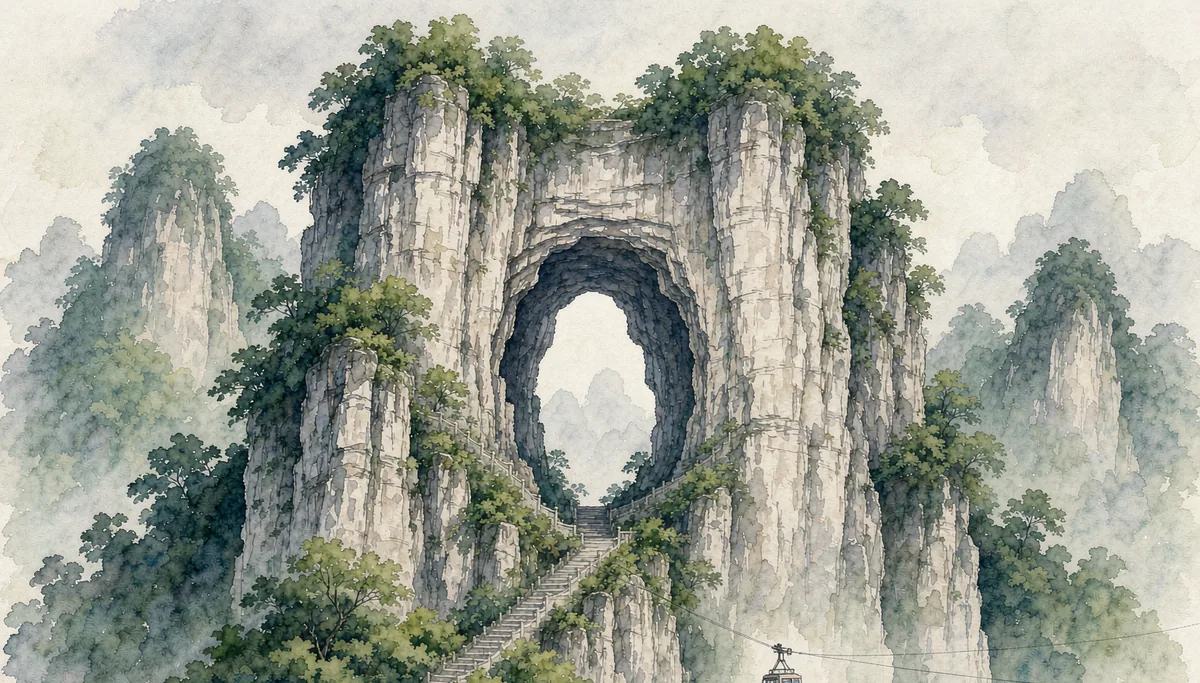
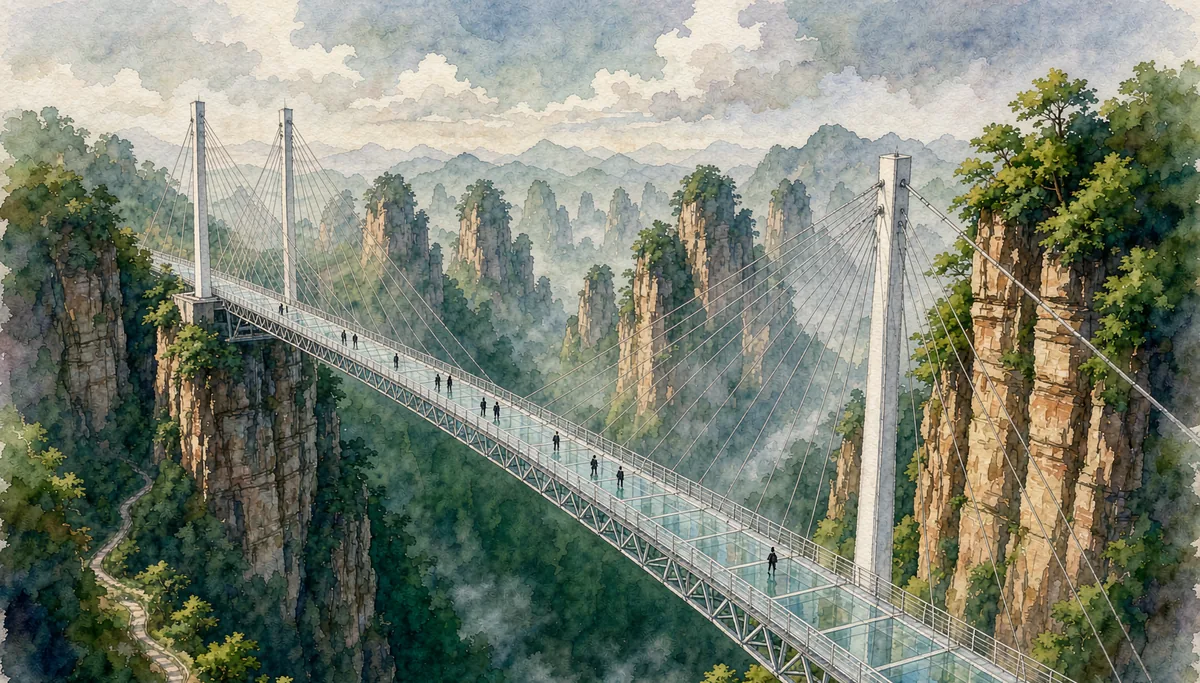
Neither Tianmen Mountain nor the Grand Canyon Glass Bridge is covered by the Wulingyuan core-area pass. Tianmen Mountain sits above Zhangjiajie city in Yongding district and is reached by a long cableway from a downtown station; its ticketed routes are sold as A, B or C lines that determine whether you ascend by cableway or by road shuttle, and the glass cliff walkways and the escalators inside the mountain are additional items. The Grand Canyon Glass Bridge is roughly an hour's drive further out, with its own timed entry and shoe-cover rules. Budget both as separate half-days with separate tickets, and check the official channel for each rather than assuming a combined pass exists. Third-party bundles frequently repackage the same standard tickets at a markup.

Choosing a gate and reading the shuttle network

The five core-area gates are the east gate at Wulingyuan, the south gate at the Forest Park station, the west gate at Yangjiajie, the north gate at Tianzi Mountain and the central Zimugang gate. Your gate choice should follow your accommodation, not the map: staying in Wulingyuan town puts the east gate and the Bailong Elevator on your doorstep, while staying near the south gate suits Golden Whip Stream and Huangshizhai. The included shuttle buses move between sector transfer points, but they do not climb to the summit viewpoints; those require a cableway, the Bailong Elevator or a long stair climb, all charged separately. The Bailong Elevator is listed at ¥65 one way on the official Wulingyuan ticketing site, and other cableways such as Yangjiajie and Huangshizhai have their own single-ride prices. Carry your identity document every day for re-entry.

Weather, closures and crowd timing

Mist is the defining variable in Zhangjiajie, not an inconvenience. Low cloud regularly hides the Yuanjiajie and Tianzi Mountain panoramas for a morning and lifts quickly afterwards, so keep one flexible half-day rather than locking every viewpoint to a fixed hour. April to June and September to November offer the most comfortable walking, though spring and early summer are wet; July and August are hot and the busiest for domestic family travel; winter is quiet and occasionally icy, with possible cableway and exposed-stair closures. The first week of October is the year's peak and should be avoided if your dates are flexible. Arrive at the east gate before 08:00 in high season, and book timed entries for the glass bridge and Tianmen Mountain several days ahead of a holiday.

Getting there, paying and staying legally

Arrive by high-speed rail at Zhangjiajie West station or by air at Zhangjiajie Hehua airport, then transfer to either Wulingyuan town or the urban district. Wulingyuan town is the better base for a multi-day park visit; the city centre is the better base for Tianmen Mountain, whose cableway station is downtown. The two are roughly 40 minutes apart by road, so switching hotels mid-trip costs more time than it saves. Set up Alipay or WeChat Pay before arrival for shuttles, restaurants and small shops, carry your passport for ticket checks and hotel registration, and confirm that your hotel is licensed to accept foreign guests before booking. Save gate and hotel names in Chinese characters for ride-hailing apps, because English input is unreliable. For entry rules, see our China visa guide rather than assuming a transit exemption applies.
A day-by-day itinerary for Zhangjiajie

A realistic structure for a first visit. Adjust the order to match opening days, weather and your own pace — fewer sights done well beats a checklist.

Day 1

Yuanjiajie, the Bailong Elevator and the pillar panoramas

Enter through the east gate at Wulingyuan before 08:00, take the included shuttle to the Bailong Elevator and ride up to Yuanjiajie. The elevator is a separate ¥65 one-way charge on the official price list and climbs a vertical cliff in under two minutes, saving a long steep ascent. From the top, the walkway loop passes the tall, narrow pillar that became the reference for Avatar's floating mountains and a series of crowded but genuinely distinct viewpoints. Allow three hours, walk the full loop rather than photographing the first platform, and keep the passport used for the ticket with you for gate checks.

In the afternoon, use the shuttle to reach the Ten-Mile Gallery or descend along the lower valley if the weather closes in above. Mist that ruins a summit panorama often makes the forest floor more atmospheric, so a flexible plan beats a fixed checklist. Return to Wulingyuan town for dinner; the same four-day pass covers re-entry tomorrow, so there is no reason to stay inside the park until closing time. Compare the official shuttle map at the gate with your planned route, because transfer points are signed in Chinese first.

  • The four-day pass allows repeated entry — no need to buy again tomorrow
  • Bailong Elevator and summit cableways are charged separately from the pass
  • Buy the ¥236 pass including the shuttle rather than the ¥165 ticket alone
Day 2

Tianzi Mountain, Yangjiajie and a weather buffer

Use day two for the northern and western sectors. Tianzi Mountain delivers the widest sea-of-pillars views when the cloud base is high, and the Yangjiajie area is noticeably quieter with narrow ridge paths and fewer tour groups. Both are reached by shuttle plus a cableway; the Yangjiajie cableway is a separate ticket. Start with whichever sector has the clearer forecast that morning, and keep the other for the afternoon. If the cloud never lifts, switch to Golden Whip Stream, a flat valley walk that stays impressive in rain and does not depend on a distant view.

Bring water and a light rain shell, because summit kiosks are limited and prices are higher than in town. The exposed stone steps become slippery in drizzle, and photography platforms have narrow railings that fill quickly when a tour group arrives. Do not schedule a same-evening onward train from this day: shuttle queues at the end of the afternoon can add an hour, and the last internal buses stop well before dusk. End back in Wulingyuan town so day three starts from the same gate.

  • Prioritise Tianzi Mountain on the clearest morning, not on a fixed day
  • Golden Whip Stream is the reliable wet-weather alternative
  • Internal shuttles stop early — leave the summit area by late afternoon
Day 3

Golden Whip Stream, Huangshizhai or a second clear-weather attempt

Golden Whip Stream is a roughly 7.5-kilometre, mostly flat valley walk between towering rock walls, with macaques along the path and none of the vertical exposure of the summit loop. It is the best third-day choice after two days of stairs and cableways, and it works in light rain. Keep food secured: the monkeys are habituated to visitors and will investigate bags. If you prefer a summit finish, take the Huangshizhai cableway for a compact plateau circuit with wide views and fewer transfers. Either option is covered by the same four-day pass.

Use the afternoon as the weather buffer you deliberately left open. If the first two days were misty, return to the viewpoint that matters most to you; if they were clear, switch base to Zhangjiajie city for the following morning's Tianmen Mountain ascent. Transferring in the late afternoon also means the downtown cableway station is a short ride away at opening time. Confirm the Tianmen Mountain route letter you have booked — A, B or C — because it decides whether you start with the long cableway or the road shuttle to the arch.

  • Golden Whip Stream is flat, shaded and reliable in poor visibility
  • Keep food away from macaques along the valley path
  • Move to the city centre on day three evening for an early Tianmen Mountain start

Where to stay

  • Wulingyuan town, beside the east gate, is the strongest base for a multi-day park trip: the Bailong Elevator shuttles, restaurants and the Ten-Mile Gallery transfer point are all close, and you can be at the gate before the queues form. Mid-range hotels cluster along the main street, and the four-day pass makes returning each evening painless.
  • Zhangjiajie city centre (Yongding district) suits travellers whose priority is Tianmen Mountain, because the cableway lower station is downtown. It is also the better base for late flights or high-speed rail, but it adds roughly 40 minutes of road transfer each way to the Wulingyuan gates.
  • The south gate area near the Forest Park station is quieter and gives direct access to Golden Whip Stream and Huangshizhai. It has fewer dining and transport options than Wulingyuan town, so it works best for travellers who have already decided to spend most of their time on the valley and western sectors.
  • Confirm that the property is registered to accept foreign guests before booking — not every small guesthouse in the area is — and keep your passport available for check-in registration. Save the hotel name and address in Chinese characters for taxi and ride-hailing apps.
  • Book ahead for late April to early May and the first week of October, when domestic demand peaks and timed-entry slots for Tianmen Mountain and the glass bridge sell out. Shoulder-season rooms in Wulingyuan town are otherwise good value, and a three-night stay avoids an unnecessary hotel change.

Budget notes

  • The core cost is fixed and published: ¥165 for the four-day Wulingyuan ticket without the shuttle or ¥236 with it, plus ¥83 / ¥119 concessions and a ¥310 annual pass. Budget the ¥236 version; buying the cheaper ticket and then paying for internal transport separately is a false economy because the sectors are far apart.
  • Summit transport is separate. The Bailong Elevator is listed at ¥65 one way on the official Wulingyuan ticket page, and the Tianzi Mountain, Yangjiajie and Huangshizhai cableways each have their own single-ride prices. A three-day park visit commonly adds ¥150–300 per person in lifts depending on how many sectors you climb.
  • Tianmen Mountain and the Grand Canyon Glass Bridge are entirely separate tickets with their own timed-entry rules. Third-party listings for Tianmen Mountain commonly sit around ¥280–290 for a route package, but the official channel is the authority; treat any bundle that claims to cover all three sites as a reseller product, not an official pass.
  • Food and lodging are modest by big-city standards: a local noodle or rice meal runs roughly ¥20–40, a sit-down Hunan dinner ¥50–100 per person, and a mid-range room in Wulingyuan town ¥200–450 outside peak weeks. Mountain kiosks charge more for water and snacks, so buy supplies in town each morning.
  • Transfers add up quietly. The city-to-Wulingyuan road trip is roughly 40 minutes, and airport or high-speed-station transfers are extra. A shared shuttle or a booked car is cheaper than repeated ride-hailing, and the cost of one wasted transfer day usually exceeds the price of a better-located hotel.

Zhangjiajie travel questions

How many days do I need in Zhangjiajie?

Four days is the practical minimum for the three headline sights: three inside Wulingyuan and one for Tianmen Mountain or the Grand Canyon Glass Bridge. The core-area pass itself is valid for four consecutive days. Two days lets you see Yuanjiajie and one summit sector, but most of a short visit disappears into shuttle queues and cableway waits.

Is Tianmen Mountain included in the Wulingyuan ticket?

No. Tianmen Mountain is a separate park above Zhangjiajie city with its own A, B and C route tickets, and the Grand Canyon Glass Bridge is a third separate ticketed site. The Wulingyuan pass covers only the core forest park and its shuttle buses. Check each official channel for current prices and timed-entry rules before booking.

How much is the Zhangjiajie National Forest Park ticket?

Since 1 January 2025 the year-round full price is ¥165 for the ticket alone or ¥236 including the internal shuttle bus, both valid for four consecutive days; concessions are ¥83 and ¥119 and an annual pass is ¥310. Shuttle pricing was revised again from 1 January 2026. Older guides quoting seasonal or single-day prices are out of date.

Can I do Zhangjiajie in bad weather?

Partly. Low cloud regularly hides the summit panoramas, but Golden Whip Stream, the Ten-Mile Gallery and the forest-floor paths remain worthwhile in mist and light rain. Keep one flexible half-day to revisit a viewpoint if the cloud lifts, avoid the glass bridge on a departure morning, and expect occasional cableway or stair closures in icy winter conditions.

Where should I stay in Zhangjiajie?

Stay in Wulingyuan town by the east gate for a multi-day park visit, or in Zhangjiajie city centre if Tianmen Mountain and onward transport are the priority. The two are about 40 minutes apart by road, so avoid switching mid-trip. Confirm the hotel is licensed to accept foreign guests and keep your passport for registration.

Key places and realistic planning notes

No placeholder ratings or universal ticket claims—each note is specific to the named place.

Wulingyuan Sandstone Peaks

Wulingyuan Sandstone Peaks

A UNESCO-listed forest of more than 3,000 quartz-sandstone pillars across 264 km²

Planning estimate
Allow three full days across Yuanjiajie, Tianzi Mountain, Yangjiajie and Golden Whip Stream
Admission note
¥165 four-day ticket or ¥236 including the shuttle bus since 1 Jan 2025; lifts extra
Area
264 km² UNESCO World Natural Heritage site, inscribed 1992
Tianmen Mountain & Heaven's Gate

Tianmen Mountain & Heaven's Gate

A natural arch in a sheer cliff reached by cableway and a long step climb

Planning estimate
Allow a half to full day from the downtown cableway station
Admission note
Separate ticket with A/B/C route options; glass walkways and escalators extra
Area
Yongding district, above Zhangjiajie city
Zhangjiajie Grand Canyon Glass Bridge

Zhangjiajie Grand Canyon Glass Bridge

A transparent-bottom footbridge spanning a deep gorge, with timed entry

Planning estimate
Allow half a day including the road transfer from the city or Wulingyuan
Admission note
Separate timed-entry ticket; shoe covers required on the glass deck
Area
Cili County, roughly an hour by road from Wulingyuan town

Before you go

  • Buy the four-day pass including the shuttle bus
  • Book Tianmen Mountain and glass-bridge time slots separately
  • Carry the identity document used for the real-name ticket
  • Keep one flexible half-day for mist and cloud

Getting around

  • Included park shuttle buses between sectors
  • Separate cableways and the Bailong Elevator
  • City-to-Wulingyuan road transfer of about 40 minutes
  • High-speed rail at Zhangjiajie West station

Local foods to explore

  • Xiangxi smoked pork with dried chillies
  • Tujia sanxiaguo (three-pot stew)
  • Sour rice noodles with pickled vegetables
  • Wild chestnut and kiwi snacks from the park
  • Millet wine and local dark tea

Official sources and updates

Opening hours, booking rules, transport and weather can change. Check these first-party sources before travel.

Editorial review date: . Report corrections through our contact page.

Explore Zhangjiajie on the map

Map data © OpenStreetMap contributors. Confirm entrances and live routing independently.