Why Visit Sanya
Sanya is China's premier tropical beach resort, a sun-soaked escape on the southern tip of Hainan island where palm-fringed bays meet the turquoise South China Sea. Often called the 'Hawaii of China,' it pairs duty-free shopping and world-class resorts with rainforest, Buddhism, and the warm hospitality of Hainan's Li and Miao communities. Unlike the crowded cities of the mainland, Sanya moves at the slow rhythm of the tide. You come here to swim in calm, clear water, to watch fishing boats return at dusk, and to trade winter coats for swimsuits. The city stretches along more than 200 kilometers of coastline, yet it remains compact and easy to navigate. Beyond the beaches, Sanya offers a genuine sense of island freedom: scooter rides past banana groves, seafood barbecues on the sand, and the quiet thrill of standing at the literal edge of the country. For foreign travelers, Sanya is also one of the most accessible corners of China, thanks to Hainan's independent visa-free entry policy. Whether you want a pampered week in a five-star resort, a budget backpacker's dive trip, or a cultural detour to a seaside temple, Sanya delivers a tropical China that most visitors never expect. It is the rare Chinese destination where doing nothing at all is the main event.
Best Time to Visit
The best time to visit Sanya is from October through April, when temperatures settle into a comfortable 22 to 28 degrees Celsius and the humidity drops enough to make beach days pleasant. This is the dry season, with clear skies, gentle seas, and ideal conditions for swimming, diving, and sailing. November and December are especially attractive: the weather is perfect, the crowds of the Chinese New Year holiday have not yet arrived, and hotel rates are reasonable. January and February bring the largest influx of domestic tourists escaping the northern winter, so book early if you travel then. The off-season runs from May to September. It is hotter and more humid, with strong sun and the occasional afternoon thunderstorm or typhoon warning, but it has real advantages: hotels and flights can be 30 to 50 percent cheaper, and the beaches are nearly empty. If you do visit in summer, plan water activities for the morning and keep an eye on the weather forecast. Spring Festival (usually February) is the single busiest and most expensive period of the year. Whenever you come, pack reef-safe sunscreen, light clothing, and a light rain jacket, and you will find Sanya welcoming in every season.
Beaches and Bays
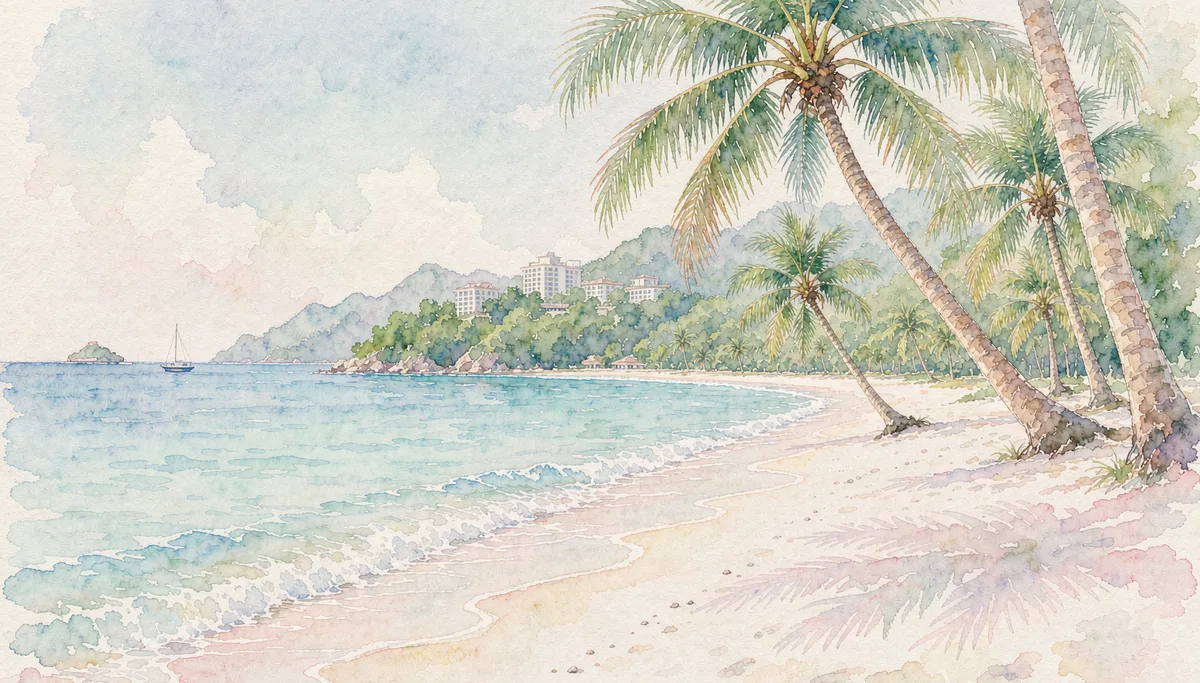
Sanya's coastline is its greatest asset, and each bay has its own personality. Yalong Bay, about 25 kilometers east of the city center, is the most famous: a seven-kilometer crescent of soft white sand and unusually clear, calm water, backed by upscale resorts and a tropical forest park. Entry to the public beach is free, so you can enjoy the sand without booking a hotel. Dadonghai, closer to downtown, is the liveliest and most convenient beach, popular with Russian visitors and lined with restaurants and bars. Sanya Bay, on the west side of the city, is where locals gather for the famous Coconut Dream Corridor, a long coastal road of coconut palms perfect for sunset strolls. Haitang Bay, north of the city, hosts the largest luxury resorts and the duty-free shopping complex. For a quieter scene, head to the surfing village of Houhai near Wuzhizhou Island, where beginner-friendly waves and a youthful beach culture have turned a fishing hamlet into Sanya's coolest hangout. Wherever you settle, the water is warm year-round and the sand is soft underfoot. Arrive before 9 a.m. or after 4 p.m. to avoid the strongest sun, and always ask the price of water sports before you commit.
Culture and Temples
Sanya is not only about beaches; its cultural heart sits at the Nanshan Cultural Tourism Zone, home to the magnificent Nanshan Temple and the towering 108-meter Sea Guanyin statue that rises from the ocean on an artificial island. This is one of the southernmost Buddhist sites in China, a place of pilgrimage where visitors come to pray for peace and good fortune. You enter through the Non-Duality Gate and then explore grand halls, tranquil courtyards, and traditional architecture set against the sea and hills. The statue itself is a marvel of engineering and devotion, visible for kilometers and especially moving at sunrise. Beyond Nanshan, Sanya's living culture belongs to the Li and Miao ethnic groups, whose weaving, silverwork, and song traditions are preserved in cultural parks and villages in the surrounding hills. The Binglanggu or Yanoda rainforest areas weave minority heritage into nature walks. Tianya Haijiao, the 'End of the Earth' rock formation on Sanya Bay, is a romantic landmark tied to ancient poems about parting and longing. Dress modestly when visiting temples, accept the free incense offered at Nanshan, and take a sightseeing shuttle to cover the large grounds comfortably. These sites give Sanya a depth that pure resort towns lack.
Food and Drink
Sanya's table is defined by the South China Sea: fresh seafood cooked the Hainan way, with restraint and a squeeze of lime. The signature local dish is Wenchang chicken, a tender free-range bird served at room temperature with a garlic-ginger dip, often paired with Hainanese rice steamed in chicken broth. At the beaches you will find hele crab, shrimp, grouper, and sea snails grilled, steamed, or thrown into a bubbling seafood hotpot. Coconut is everywhere, from chilled young coconuts cracked open on the spot to coconut shrimp soup and coconut rice. For a cheap and authentic meal, visit a seafood market, pick your catch, and pay a nearby stall to cook it for a small fee. International food is plentiful too, thanks to the Russian and expatriate communities, and the city's night markets serve grilled skewers, fresh fruit shakes, and Hainanese snacks late into the night. Vegetarians are well served at Nanshan's temple restaurants, which specialize in refined Buddhist cuisine. Drink fresh coconut water instead of soda, try the local coffee grown in the highlands of Hainan, and save room for mango and pineapple bought from roadside carts. Eating in Sanya is casual, communal, and gloriously fresh.
Island Hopping and Diving
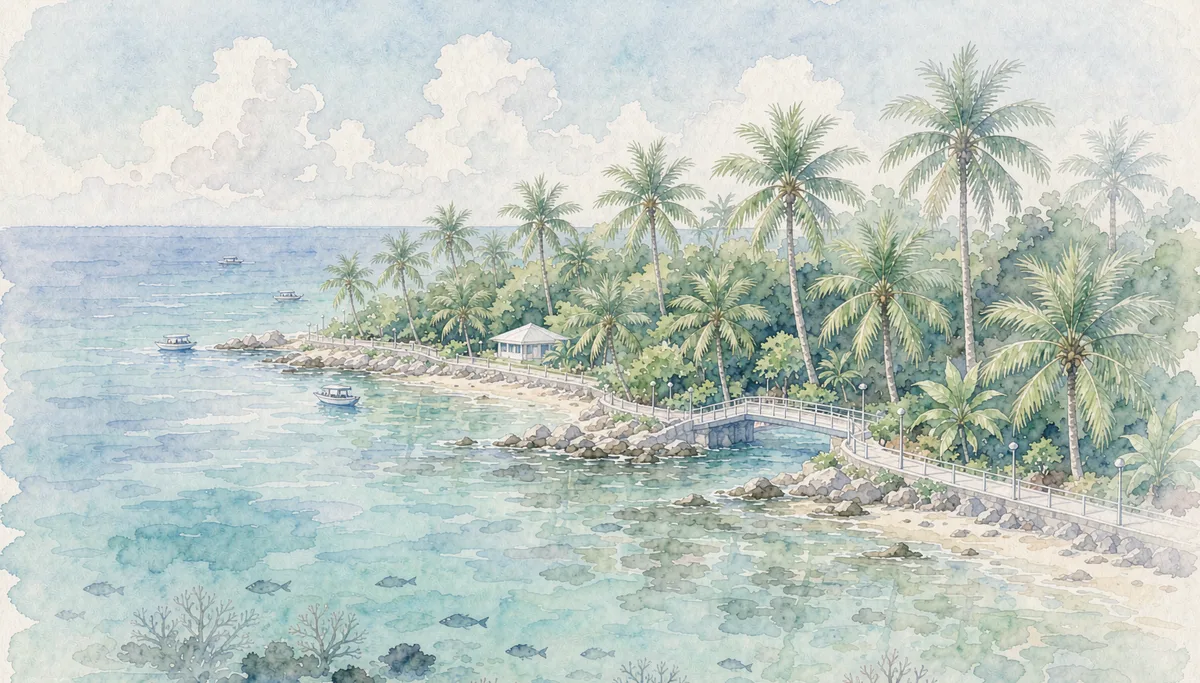
For the clearest water in Sanya, take a boat to Wuzhizhou Island, a small coral islet off Haitang Bay nicknamed 'China's Maldives' for its glassy, layered-blue sea. It is the city's premier spot for scuba diving and snorkeling, with underwater visibility reaching up to 27 meters and more than 300 species of tropical reef fish among the coral. Certified dive centers run experiences for both beginners and advanced divers, and the surrounding 'Coral Sea' is calm and vividly colored. Above the water, the island offers parasailing, jet skiing, banana boats, and a scenic electric-bus loop past Lover's Bridge and Sunrise Rock. The ferry crossing takes about 20 minutes, and the island operates roughly from 8 a.m. to 5:30 p.m., so arrive early to beat both the crowds and the afternoon wind. If you prefer to stay on the mainland, Yalong Bay and the reefs near Houhai also offer diving and snorkeling trips, and several operators run PADI courses. Bring motion-sickness medicine for the boat, pack your own water and snacks since island prices are high, and book water-sport packages online in advance to save money. Sanya's underwater world is the equal of any tropical destination.