Why Qingdao is more than a beach
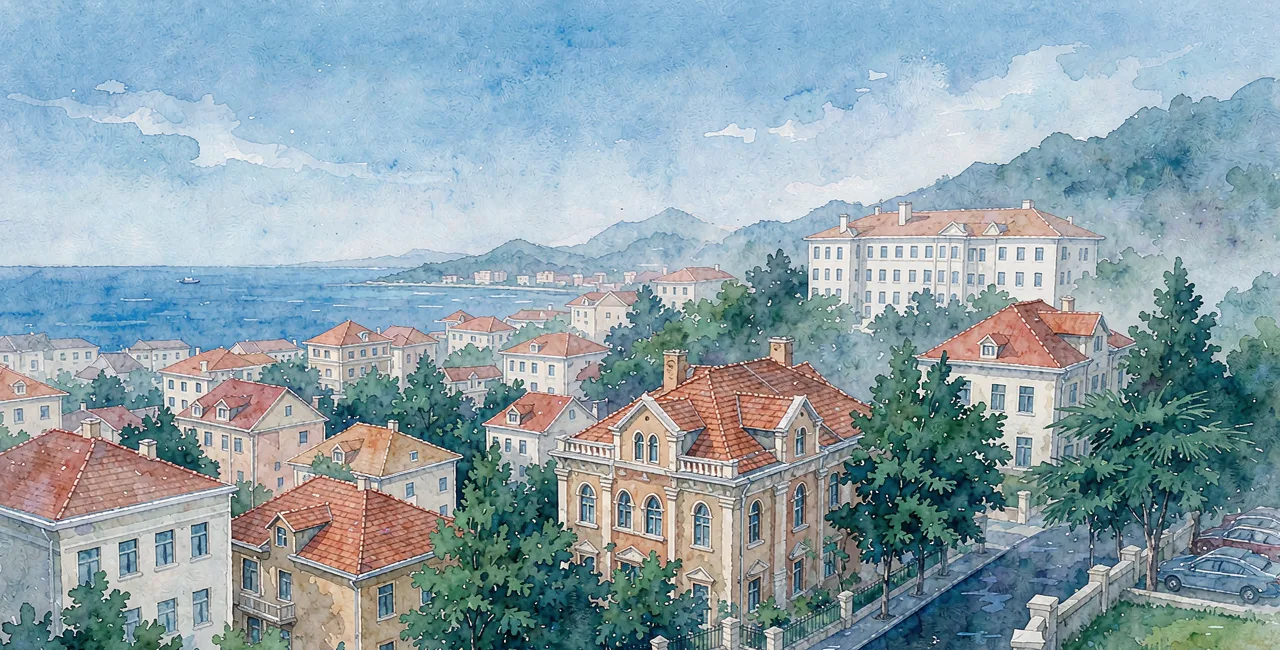
Qingdao is the rare Chinese seaside city where European and Chinese planning sit side by side. A former German leasehold, it keeps red-tiled roofs, a grid of boulevards and a beer culture that began with the 1903 Tsingtao brewery and never left. The result is a coastal city that feels both resort and working port, where you can walk a 440-metre sea pier in the morning, tour a Taoist mountain by afternoon, and drink the beer that gave the city its name in the evening. Three days covers the headline sights without rushing, and the city works as a summer destination or an autumn escape when the crowds thin. It also links by high-speed rail to Beijing, Shanghai and Jinan, so it fits a wider eastern China route rather than standing alone, and the airport adds direct links to several regional hubs.
Getting to and around Qingdao
Most visitors arrive by air at Qingdao Liuting International Airport or by high-speed rail at Qingdao Station, which sits close to the old waterfront. The metro is the easy backbone: Line 3 in particular links Qingdao Station with the beachfront, Badaguan and the central districts, and fares are a few yuan. Buses fill the gaps, and taxis or ride-hailing apps cover the rest of the trips. Laoshan is the one excursion that needs planning, because it sits about an hour east of the center by road and runs its own ticket and cable-car system separate from the city. Group your days by coast and mountain rather than mixing them, and keep hotel and attraction names in Chinese saved on your phone for taxi drivers who may not read Latin script.
Zhanqiao Pier and the old waterfront
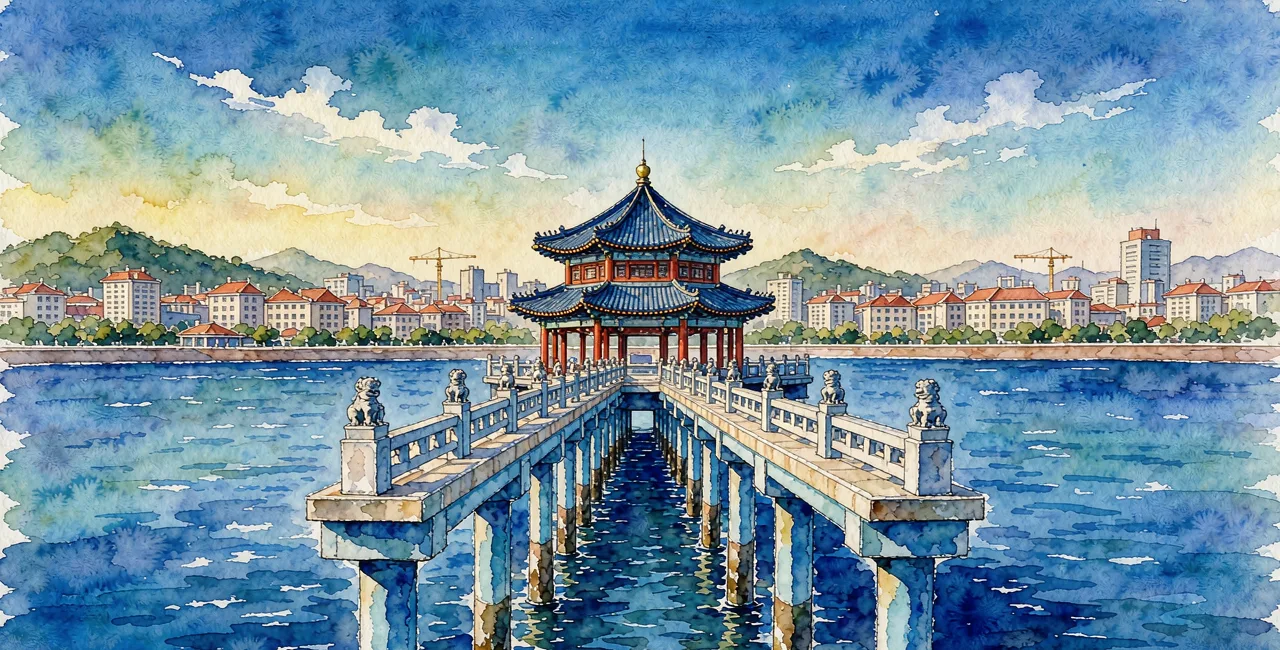
Zhanqiao Pier is the postcard: a 440-metre wooden pier built in 1892 that ends in a return pavilion, the same silhouette printed on bottles of Tsingtao beer for more than a century. It is free to walk and best at sunrise or dusk when the light flattens across the bay and the water is calm. From the pier, the southern waterfront promenade runs past the old customs house and along the shore toward the central beaches. The area is flat and easy, good for a first-evening stroll that orients you without a plan. Nearby, the small Luxun Park and the aquarium district add options if you have extra time, but the pier itself is the anchor — allow an unhurried hour rather than a quick photo stop, because the long walk out and back is the experience.
Badaguan and the villa quarter
Badaguan, meaning Eight Great Passes, is the historic villa quarter where streets are named after old passes and lined with more than 200 buildings in Russian, British, German, Spanish and other styles. Most of the area is free to wander, which is the point: it is a leafy, low-rise district made for slow walking between the architecture and the coast rather than for ticking off interiors. A couple of landmark villas charge small separate tickets — Huashi Lou is about 8.5 yuan and Princess Lou about 20 yuan — if you want to see an interior and understand how the foreign communities lived. Combine Badaguan with the nearby beaches and the waterfront for a relaxed half day, and bring comfortable shoes because the appeal is the streets themselves rather than any single building along the route.
Laoshan Mountain as a day trip
Laoshan, or Laoshan Mountain, is the Taoist peak that rises from the Yellow Sea east of the city, one of the few mountains in China that meets the ocean. At 1,132.7 metres it offers cliff temples and coastal views on routes such as Taiqing and Yangkou. Admission is about 90 yuan plus separate cable-car fees, and the summit area runs its own ticket system distinct from the city passes. Plan a full day: leave in the morning, choose one main route, ride the cable car where it helps, and return before dark so you are not caught on the mountain roads at night. The Taiqing route is the most temple-focused; Yangkou is the more dramatic coastal cliff walk. Weather and sea fog change the view fast, so check the forecast and treat a grey day as a softer, quieter mountain rather than a lost one.
Beer, seafood and the festival calendar
Qingdao's food story is beer and seafood. The Tsingtao brewery dates to 1903, and the Qingdao Beer Museum on Dengzhou Road occupies the original factory; entry is about 60 yuan, requires a passport and timed entry, and is best booked via Trip.com or the museum's WeChat mini-program because walk-up slots fill. Around it, the night markets and old-town restaurants serve clams, mackerel dumplings and grilled seafood — confirm prices before ordering at outdoor stalls, because some charge by the live weight. Summer brings swimming and the late-August International Beer Festival, while autumn is calmer and clearer. Time your visit around the festival only if you want the crowds; for the city itself, May to October is the comfortable window, with September a particularly good balance of weather and open space along the shore.