Chongqing

A vertical river city of stilted lanes, cliff-side towers and a monorail that passes through a building

By Chloe Zao, Cities & Itineraries Editor at 2Travel2China

Planning window
March to May, October to November
Common languages
Mandarin Chinese; Chongqing dialect widely spoken
Currency
Chinese Yuan (CNY)
Guide verified
Chongqing city view

Independently edited

Plan a thoughtful visit to Chongqing

Practical context for first-time international visitors. Verify time-sensitive rules with the official links below.

How to read Chongqing's vertical geography

Treat every distance on a map as an underestimate. Chongqing is built on steep river hills, so a short horizontal move can involve a 100-metre change in elevation, a lift, a long escalator and a footbridge. Hongya Cave is the clearest example: its ground floor opens onto one road and its eleventh floor opens onto another. Plan one district per half-day, allow roughly half again as much transfer time as you would in a flat city, and use the metro for long moves even when a destination looks close. The disorientation is the attraction, but it is also the main reason tight itineraries fail here.

The three signature sights: what they cost and what to book

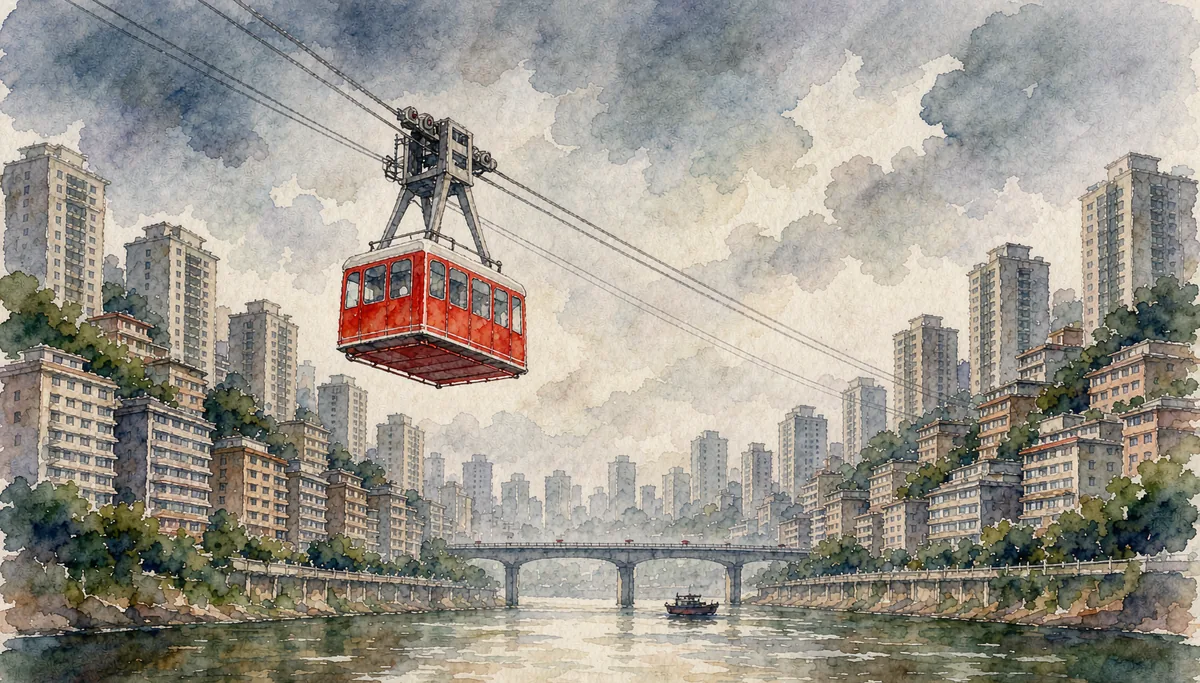
Hongya Cave is free, but holiday evenings require a real-name, time-slot reservation through its official mini-program; the lights come on around 19:00 and that is when slots are tightest. The Yangtze River Cableway is a 1,166-metre crossing opened in 1987, listed as a municipal protected heritage structure, with published fares of ¥30 single and ¥50 return and normal operating hours of 08:00 to 22:00, extended on public holidays. Buy through the cableway's own channel, which issues an automatic queue number. The Liziba monorail viewpoint is free and needs no reservation. None of the three requires a paid tour.

Using the cableway as transport rather than a round trip

Buy a single ¥30 cableway ride from the Yuzhong side at Xinhua Road to the Nan'an side at Shangxin Street, then walk the riverside and return by metro or bridge instead of buying a ¥50 return. The north-station queue on the downtown side is the longest, so an early morning or mid-afternoon crossing is calmer than the post-dinner rush; the official channel's automatic queue number means you can plan around the assigned time. The cableway is a working commuter link as well as a viewpoint, so treat it as one leg of a loop rather than a standalone attraction. Check the operator's site for maintenance notices and holiday hour changes before you go.

Where the free hours of Chongqing are best spent

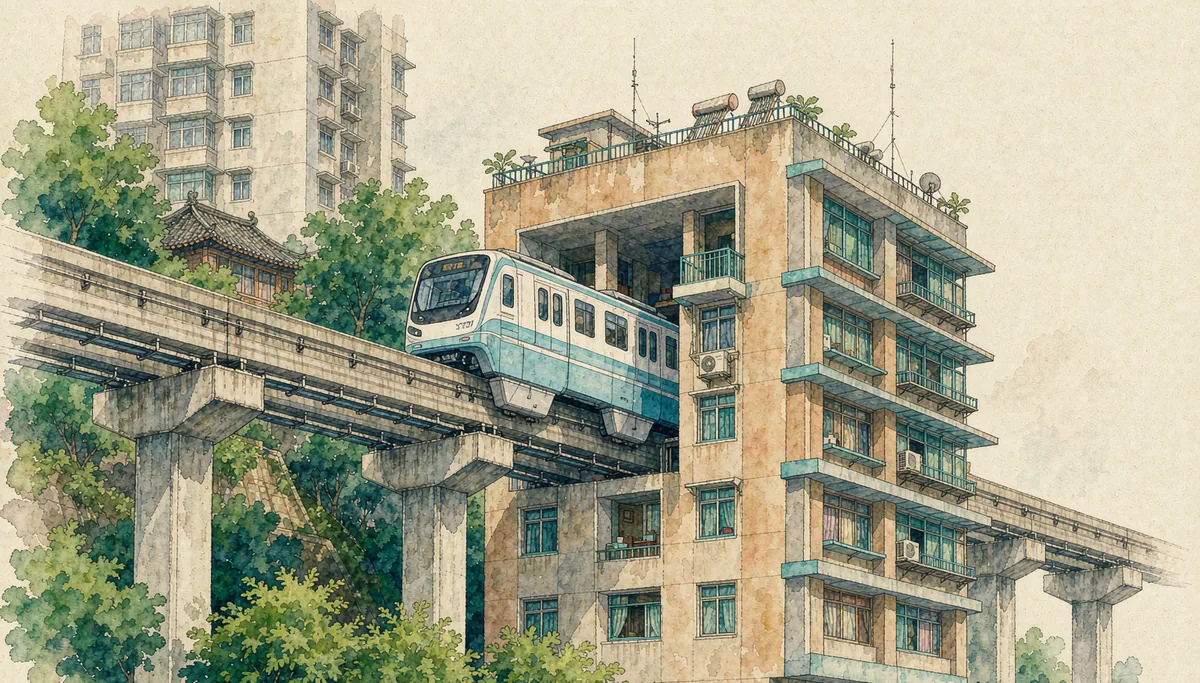
The city's best-value day costs almost nothing. Walk the stair streets and old lanes around Shibati, use the free viewing platform at Liziba to watch Line 2 trains pass through a residential tower, and spend an hour in the free Three Gorges Museum, which is closed on Mondays. The People's Great Hall beside it charges only a token admission, and the riverfront promenades give the skyline view without a boat ticket. A two-river night cruise and the Huguang Guild Hall are worthwhile paid options, but they are additions rather than the core. Hongya Cave's exterior view from the opposite bank is free even when its internal slots are full.

Heat, haze and the best season to walk

Chongqing is one of China's hottest summer cities: July and August bring sustained heat and humidity that make long stair climbs unpleasant, and the first week of October brings the biggest crowds. March to May and October to November are the most comfortable walking windows, with mild temperatures and fewer reservation pressures. Winter is damp and often hazy, which softens river views but suits indoor museums and hotpot. The city's famous fog is an advantage for atmosphere rather than for panoramic photography, so do not build a trip around a single clear skyline shot. Carry water in summer and a light rain shell in spring.

Arrival, payment and the 240-hour question

Chongqing Jiangbei International Airport and the city's high-speed stations are all connected to the metro, but station names matter: Chongqing North, Chongqing West and Shapingba serve different lines, so confirm the one on your ticket before setting off. Set up Alipay or WeChat Pay before arrival for metro gates, cableway tickets and small shops, keep your passport for hotel registration, and save addresses in Chinese characters for ride-hailing apps. Chongqing is among the ports covered by China's 240-hour transit visa-free programme, but eligibility depends on nationality, onward routing and the permitted area; check the current port list in our China visa guide before building a multi-city itinerary around it.
A day-by-day itinerary for Chongqing

A realistic structure for a first visit. Adjust the order to match opening days, weather and your own pace — fewer sights done well beats a checklist.

Day 1

Yuzhong, the old stair streets and Hongya Cave after dark

Start in the Yuzhong peninsula with Jiefangbei and the Shibati stair streets, where the vertical layout is immediately obvious and the older lanes survive between towers. Walk rather than taking short taxis: the stairways, elevated walkways and level changes are the point of the district, and a car route hides them. Allow a generous morning and keep the afternoon flexible, because a five-minute map distance here can take twenty minutes of lifts and steps. If Monday is not an issue, add the free Three Gorges Museum and the People's Great Hall near the upper part of the district.

Reserve a Hongya Cave evening slot through the official mini-program if your date falls on a weekend or holiday, then arrive before the 19:00 lighting for the exterior view from the river side. The interior is a commercial stack of shops and restaurants; the better view is from across the water or from the bridge approach, which is free and does not require the reservation. Cross the Jialing River for the full illuminated cliff, then return by metro. Skip the paid two-river cruise on your first night unless the skyline is the specific reason you came.

  • Hongya Cave is free but holiday evenings need a timed reservation
  • The exterior skyline view from the opposite bank needs no ticket
  • Allow extra time for lifts, stairs and level changes
Day 2

Cableway crossing, Liziba and the cliff-side lanes

Book a morning or mid-afternoon single ride on the Yangtze River Cableway through the operator's official channel, which assigns a queue number. The crossing is 1,166 metres and has been operating since 1987; from the Nan'an side at Shangxin Street, walk the hillside lanes and the riverside promenade for a different view of the downtown skyline. Return by metro rather than buying a return ticket, so the day becomes a loop instead of an out-and-back. Check the operator's site for maintenance and holiday-hour notices before setting off.

In the afternoon, take the metro to Liziba and use the free viewing platform to watch Line 2 trains pass through the middle floors of an apartment block. Continue along the line to the older streets or to Ciqikou if you want a half-day of lanes and snack shops, though Ciqikou is heavily commercialised at weekends. The combination of a working commuter cableway and a commuter train through a building says more about Chongqing than any paid observation deck. End with a hotpot dinner and keep the spice level explicit when ordering.

  • A single ¥30 cableway ride plus a metro return beats a ¥50 round trip
  • Liziba viewing platform is free and needs no booking
  • The Three Gorges Museum is free but closed on Mondays
Day 3

Museums, guild halls or a Yangtze cruise departure

Use a third day for the city's historical layer: the Three Gorges Museum, the People's Great Hall, the Huguang Guild Hall with its carved timber stages, or the wartime sites scattered across the hills. These are indoor, low-cost and make a reliable rainy-day plan; note the museum's Monday closure and its free reservation system. Alternatively, spend the day on a slower riverfront walk and a boat view of the confluence, which is where the city's scale becomes clearest without another stair climb.

Chongqing is also the departure point for Yangtze cruises toward the Three Gorges, but those are multi-day commitments with their own boarding piers and timetables, not a city-break add-on. If you are continuing by rail, confirm whether your train leaves from Chongqing North, Chongqing West or Shapingba and allow a long buffer for the metro transfer. If you are using the 240-hour transit visa-free programme, verify the permitted area and onward route in our China visa guide before finalising a multi-stop plan.

  • Museums and guild halls are the reliable wet-weather day
  • A Three Gorges cruise is a separate multi-day trip
  • Confirm the exact rail station before leaving the hotel

Where to stay

  • Jiefangbei and the Yuzhong peninsula are the strongest first-time base: Hongya Cave, the Shibati stair streets, the cableway north station and several metro lines are all within walking distance. The trade-off is noise, steep approaches and higher room rates on weekend nights.
  • The Nan'an riverside along Nanbin Road gives the best night view of the Yuzhong skyline and is generally quieter and better value. It suits travellers who want the illuminated cliff from their window and do not mind a metro or bridge crossing to reach the old districts.
  • Near Chongqing North station works for late arrivals, early departures and cruise transfers, with straightforward business hotels and direct metro access. It is the least atmospheric base, but it removes the risk of a complicated hillside transfer with luggage before an early train.
  • Confirm the hotel is registered to accept foreign guests, and check which street level its entrance is on — in this city the lobby may be on the eleventh floor of a building whose ground floor faces a different road. Keep your passport for registration and save the address in Chinese characters for ride-hailing apps.
  • Avoid the first week of October and the hottest weeks of July and August if you can. Spring and autumn weekends still bring evening crowds at Hongya Cave, so book a cancellable rate and reserve the night slot at the same time as the room.

Budget notes

  • Chongqing is remarkably cheap for its scale. Hongya Cave, the Liziba viewing platform, the Shibati lanes, the riverfront promenades and the Three Gorges Museum are free, and the People's Great Hall charges only a token admission. Most of a first day can be done without buying a ticket.
  • The cableway is the main fixed sightseeing cost at ¥30 single or ¥50 return on published official guidance, with an automatic queue number through the operator's own channel. Buy a single ride and return by metro. Two-river night cruises, observation decks and the Huguang Guild Hall are optional extras with separate tickets.
  • Metro rides are a few yuan and cover the hills far better than taxis, which often have to loop around one-way roads and level changes. Budget extra time rather than extra money for transfers. A modest daily transport spend of ¥15–30 per person is realistic for a full day of movement.
  • Food is good value: a bowl of Chongqing xiaomian noodles runs roughly ¥10–20, a street snack meal ¥20–40, and a sit-down hotpot dinner ¥80–150 per person depending on the restaurant and the number of plates. Ask for a mild broth if you are not used to Sichuan peppercorns, and check whether the dipping oil and condiments are charged separately.
  • Mid-range rooms in Yuzhong commonly sit around ¥250–600 outside peak weeks, with river-view premiums on weekend nights. The October holiday pushes both rates and Hongya Cave reservation pressure up sharply, while July and August are cheaper but physically demanding for a walking itinerary.

Chongqing travel questions

Is Hongya Cave free to visit?

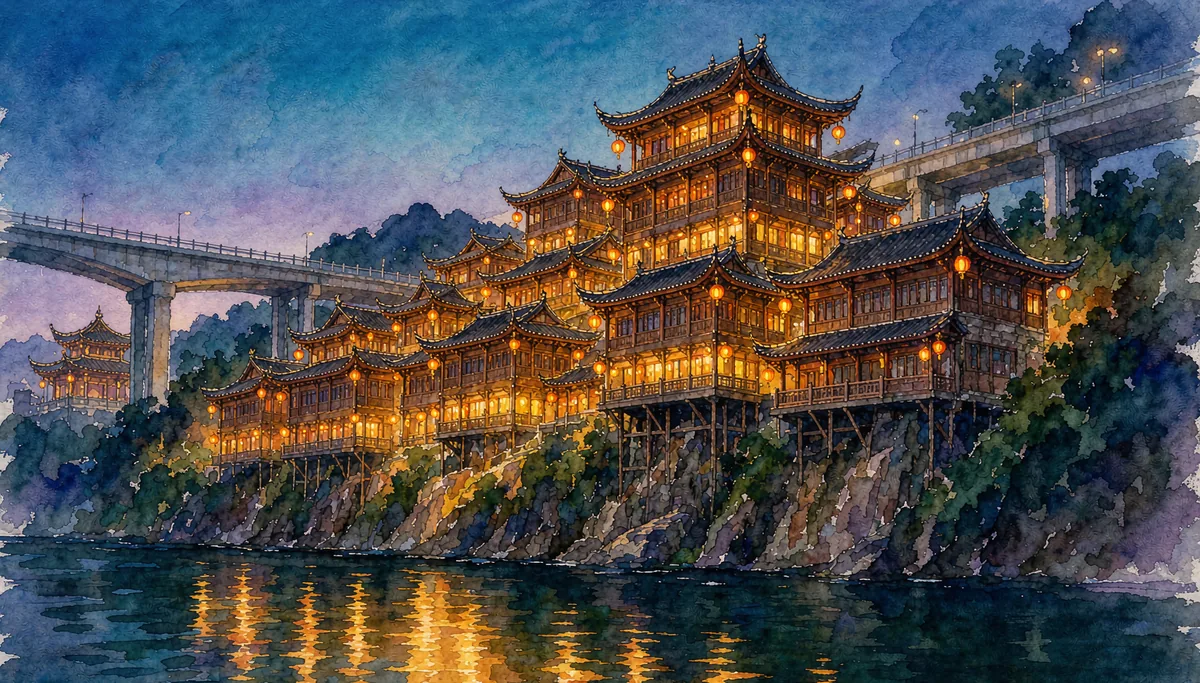
Yes, Hongya Cave is free to enter and is best after the lights come on around 19:00. On holidays and busy weekends the official mini-program requires a real-name, time-slot reservation, and evening slots fill first. The exterior view of the illuminated cliff from the opposite river bank is free and needs no reservation, and is arguably the better photograph.

How much is the Yangtze River Cableway and do I need a return ticket?

Published official fares are ¥30 for a single ride and ¥50 for a return. Buy a single ride from Xinhua Road in Yuzhong to Shangxin Street in Nan'an, walk the riverside and return by metro instead. The operator's channel issues an automatic queue number; normal hours are 08:00 to 22:00, extended on public holidays.

How many days should I spend in Chongqing?

Two full days covers the old stair streets, Hongya Cave, the cableway and Liziba. Add a third for the Three Gorges Museum, the Huguang Guild Hall or a slower riverfront day. Allow more transfer time than a flat city would need, because short map distances often hide a large change in elevation.

When is the best time to visit Chongqing?

March to May and October to November are the most comfortable walking windows. July and August are extremely hot and humid, making the city's many stairs tiring, and the first week of October brings the largest crowds and the tightest Hongya Cave slot controls. Winter is damp, hazy and well suited to museums and hotpot.

Does the 240-hour transit visa-free policy cover Chongqing?

Chongqing is among the ports covered by China's 240-hour transit visa-free programme, but eligibility depends on nationality, onward travel and the permitted stay area. Do not build a multi-city itinerary on the assumption that it applies automatically — check the current port list and conditions in our China visa guide before booking.

Key places and realistic planning notes

No placeholder ratings or universal ticket claims—each note is specific to the named place.

Hongya Cave

Hongya Cave

Eleven storeys of lit stilted wooden buildings stacked against a river cliff

Planning estimate
Allow one to two hours around and after the 19:00 lighting
Admission note
Free; real-name timed reservation required on holidays and busy weekends
Area
Yuzhong district, cliff above the Jialing River
Yangtze River Cableway

Yangtze River Cableway

A 1,166-metre passenger cableway crossing the river between Yuzhong and Nan'an

Planning estimate
Allow a half-day as a one-way crossing with a riverside walk
Admission note
¥30 single / ¥50 return; buy through the operator channel with queue number
Area
1,166 m crossing between Xinhua Road (Yuzhong) and Shangxin Street (Nan'an), opened 1987
Liziba Monorail Through a Building

Liziba Monorail Through a Building

A Line 2 monorail train passing through the middle floors of an apartment block

Planning estimate
Allow 20–40 minutes at the viewing platform
Admission note
Free; no reservation
Area
Metro Line 2, Liziba station, Yuzhong district

Before you go

  • Reserve a Hongya Cave evening slot on holidays
  • Buy a single cableway ride through the official channel
  • Check the Three Gorges Museum's Monday closure
  • Confirm the exact rail station on your ticket

Getting around

  • Metro Line 2 and the hillside network
  • Yangtze River Cableway as a one-way crossing
  • Public lifts, escalators and long stair streets
  • High-speed rail from Chongqing North, West or Shapingba

Local foods to explore

  • Chongqing hotpot with Sichuan peppercorns
  • Xiaomian chilli noodles for breakfast
  • Suanla fen sweet-potato noodles
  • Lazi chicken with dried chillies
  • Ice jelly and sweet glutinous rice snacks

Official sources and updates

Opening hours, booking rules, transport and weather can change. Check these first-party sources before travel.

Editorial review date: . Report corrections through our contact page.

Explore Chongqing on the map

Map data © OpenStreetMap contributors. Confirm entrances and live routing independently.