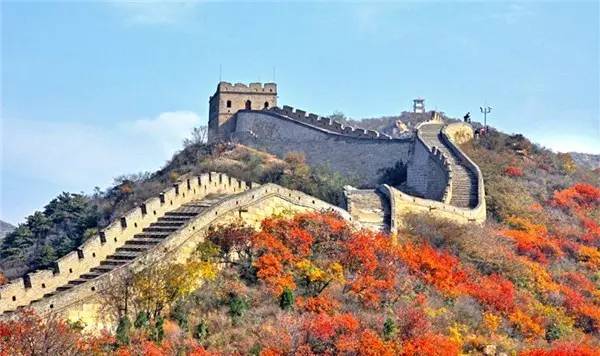
Great Wall Sections Compared 2026: Badaling, Mutianyu, Jinshanling and Simatai
The Great Wall near Beijing is not one place but a string of restored and wild sections, and the section you choose changes the whole day. Badaling is the easiest and busiest, Mutianyu is the best restored and calmer, Jinshanling and Simatai are for hikers and photographers who want an unpolished wall. This guide compares 2026 ticket prices, cable-car costs, crowds, transport and booking so you can pick the section that fits your trip.
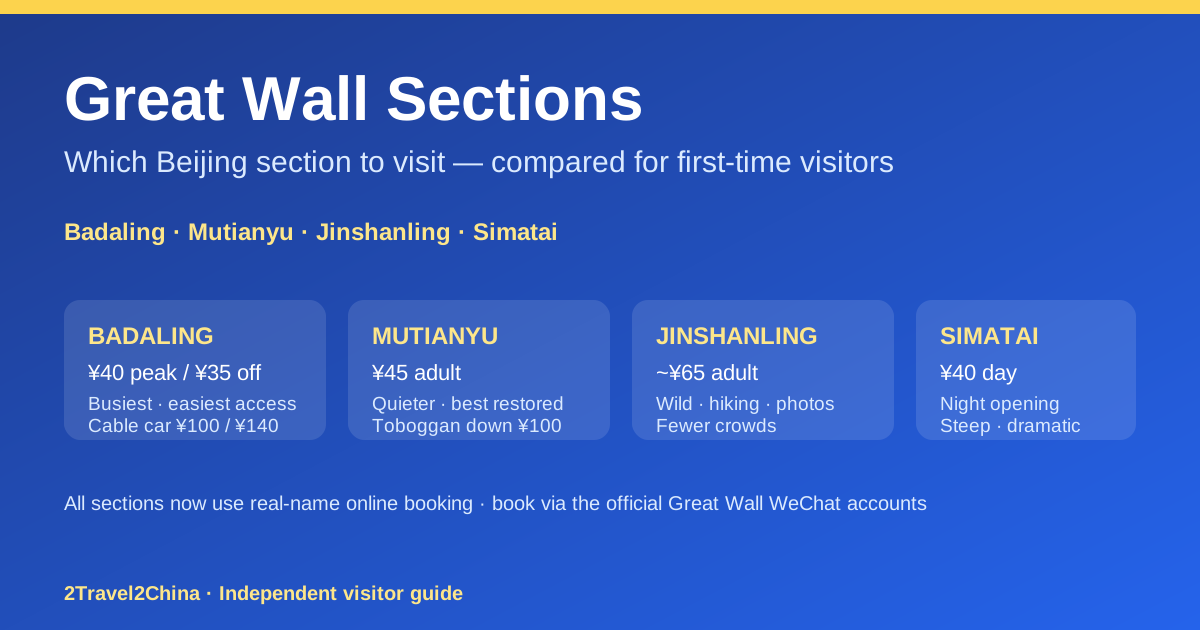
Which Great Wall section should you visit from Beijing?
For a first visit with limited time, Mutianyu is the best all-round choice: it is fully restored, far less crowded than Badaling, has a cable car up and a toboggan down, and sits under two hours from the city. Choose Badaling only if you want the most famous, most accessible stretch and can accept heavy crowds, or if you arrive by high-speed rail from Beijing North or Qinghe in about 26 minutes. Pick Jinshanling or Simatai when you want a wilder, quieter wall and do not mind more travel and more walking.
| Section | Adult ticket | Crowd level | Best for |
|---|---|---|---|
| Badaling | RMB 40 peak / RMB 35 off | Very high | First timers, easy rail access |
| Mutianyu | RMB 45 | Moderate | Best restored, families |
| Jinshanling | Around RMB 65 | Low | Hiking, photography |
| Simatai | RMB 40 (day) | Low | Steep wall, night opening |
Badaling: the classic, and the busiest
Badaling is the section most visitors know, the one closest to the standard postcard image, and the one with the easiest transport: a high-speed train from Beijing North or Qinghe stations reaches Badaling Changcheng station in about 26 minutes. The trade-off is crowds. The site caps at 65,000 visitors a day, peak-season tickets are RMB 40 and off-peak are RMB 35, and the north aerial cable car runs one-way for RMB 100 and round-trip for RMB 140. A practical 2026 notice: the north cable car was under maintenance from 20 October to 25 December 2026, so confirm the official notice and use the south cable car or walk during that window.
- Ticket: RMB 40 peak (April to October), RMB 35 off-peak (November to March).
- Cable car: one-way RMB 100, round-trip RMB 140; south ground cable car the same range.
- Opening: 06:30 to 16:30 in peak season, 07:30 to 16:00 off-peak.
- Daily cap of 65,000; book the official Badaling WeChat account ahead in holidays.
Mutianyu: the best-restored, quieter alternative
Mutianyu is the section travel professionals steer first-time visitors toward. It is heavily restored, scenic, and consistently less crowded than Badaling even on busy days, with a daily cap of about 30,000. The adult ticket is RMB 45, the cable car one-way is RMB 100 and round-trip is RMB 120, and the signature extra is a wheeled toboggan that runs down from the wall for RMB 100. Book through the official Mutianyu WeChat account, and expect roughly 1.5 to 2 hours of travel each way from central Beijing.
If you only have half a day, Mutianyu fits more comfortably than Badaling because it is closer to the northern districts and the toboggan makes the descent fun rather than tiring. With six-plus hours, Badaling gives a deeper, more iconic experience.
Jinshanling and Simatai: the wild wall for hikers
Jinshanling and Simatai are the sections for visitors who want the wall as a hike rather than a photo stop. Jinshanling, about two hours from Beijing, charges roughly RMB 65 for an adult ticket and is known for original, unrestored masonry and long ridge walks that reward photographers at sunrise and sunset. Simatai, further out, charges around RMB 40 for daytime entry and is unusual for a night opening, when lit wall sections give a completely different experience. Both are less serviced than Badaling or Mutianyu, so bring water, proper shoes and a full battery.
- Jinshanling: around RMB 65 adult, low crowds, best for ridge photography.
- Simatai: around RMB 40 daytime, night opening on selected dates, steep and dramatic.
- Both need more travel time and more walking than the restored sections.
- A low-season RMB 27 discount ticket is sold at Jinshanling in quiet months.
How do you book and get there in 2026?
Every major section now uses real-name online booking, and you should reserve on the official WeChat account for the section you choose rather than hoping for a walk-up, which the busiest sites do not reliably allow in holidays. For Badaling, the high-speed rail from Beijing North or Qinghe to Badaling Changcheng station is the calmest way in and avoids the notorious traffic jams on the approach road; the public 877 bus from Deshengmen is cheaper but slow and congested. Mutianyu, Jinshanling and Simatai are easiest by booked shuttle or private transfer, because public options are thinner.
Avoid the illegal taxis that tout outside Beijing transit hubs promising a cheap direct ride to the wall. Use the official 877 bus, the high-speed train, or a booked shuttle. The scams add detours and surcharges and are the most common complaint among first-time visitors.
How do you choose between the sections with limited time?
Time is the real decider when you are based in Beijing and the wall is a day trip rather than an expedition. With only half a day, Mutianyu is the safer choice because it sits closer to the northern districts and its toboggan makes the descent quick and fun, whereas Badaling only fits a tight half day if you take the high-speed rail and accept a busier, more packaged visit. With a full six hours or more, Badaling gives the most iconic, most photographed stretch and room to walk farther along the ramparts.
Budget also shapes the decision. Badaling and Mutianyu both charge a cable-car premium that can roughly double the ticket cost, while Jinshanling and Simatai reward walkers who skip the lifts, so a hiker saves money and gains a wilder, less crowded wall. If photography is the goal, Jinshanling's unrestored ridges at sunrise are unmatched, and Simatai's night opening is the only chance to shoot a lit wall after dark. Match the section to the experience you actually want rather than the one with the biggest name, because the four sections feel like four different places.
Families and older visitors should weigh effort as well as scenery. Mutianyu's cable car up and toboggan down minimises climbing, which is why guides steer first-timers and children there, while Badaling's north section is steep and its maintenance closures can change the plan at short notice. Jinshanling and Simatai involve real hiking with uneven steps and little shade, so they suit fit travellers rather than a relaxed family morning. None of the sections is impossible, but the right fit keeps the day enjoyable instead of exhausting.
- Half day from Beijing: Mutianyu, closest calmest restored wall.
- Full day: Badaling, iconic stretch and a longer rampart walk.
- Photography: Jinshanling ridges at sunrise, Simatai lit at night.
- Budget hikers: skip the cable car at Jinshanling or Simatai.
What should you know before you go?
Dress for a climb: the wall is steep, the steps are uneven, and there is little shade, so comfortable shoes, water and sun protection matter more than they would in the city. The best light and the fewest people are at opening, especially on weekdays, while weekends and Golden Week turn the restored sections into slow-moving queues. Finally, check the official notice for your section before you leave, because cable-car closures and seasonal hours change, and the Badaling north cable car maintenance in late 2026 is exactly the kind of detail that affects your plan.
- Book the official section WeChat account ahead; walk-up is unreliable in holidays.
- Arrive at opening on a weekday for the best light and the smallest crowds.
- Wear proper shoes and carry water; the wall is a real climb.
- Confirm cable-car status and seasonal hours on the official notice the day before.
Frequently asked questions
Which Great Wall section is best for a first visit?
Mutianyu is the best all-round first choice: fully restored, much calmer than Badaling, with a cable car up and a toboggan down and under two hours from Beijing. Pick Badaling for the most iconic, easiest-to-reach stretch if you accept crowds, or Jinshanling and Simatai for a wilder hike with fewer people.
How much is the Great Wall in 2026?
Badaling is RMB 40 in peak season and RMB 35 off-peak; Mutianyu is RMB 45 adult; Jinshanling is around RMB 65; Simatai is around RMB 40 daytime. Cable cars add RMB 100 one-way or RMB 120 to 140 round-trip. Tickets are bought through each section's official WeChat account with real-name reservation.
Can I take a train to the Great Wall?
Yes, for Badaling. A high-speed train from Beijing North or Qinghe stations reaches Badaling Changcheng station in about 26 minutes, which avoids the road traffic that jams the approach. Mutianyu, Jinshanling and Simatai have thinner public transport and are easier by booked shuttle or private transfer.
Is the Great Wall open in winter?
Yes. Off-peak tickets are cheaper and crowds are far smaller from November to March, though it is cold and some cable cars run shorter hours. Check the official notice before you go, because maintenance closures happen, such as the Badaling north cable car closure from 20 October to 25 December 2026.
Do I need to book the Great Wall in advance?
For the busy restored sections, yes. Badaling and Mutianyu use real-name online booking and the daily quotas sell out in holidays, so reserve on the official WeChat account before you travel. The wilder sections are less likely to sell out but still benefit from advance booking and a confirmed transfer.