Tour of Guizhou 2026: A Cycling Race That Put Guizhou on the Travel Map
In October 2026, southwest China's Guizhou province staged the second Tour of Guizhou (Park Province) International Road Cycling Race, an 11-day, nine-stage event that looped through all nine of its prefectures. Beyond the sport, the race is a travel signal: a 1,205 km moving showcase of karst waterfalls, minority villages, cool summers and grassroots basketball that tells you exactly why Guizhou deserves a place on a China itinerary.
What was the Tour of Guizhou 2026, and why should travelers notice it?
The second Tour of Guizhou (Park Province) International Road Cycling Race ran from 17 to 27 October 2026, covering all nine prefectures of Guizhou, a mountainous province in southwest China. For travelers it matters because the 1,205 km route is a moving showcase of Guizhou's karst scenery, minority cultures and food - and a clear sign the province is marketing itself as a global outdoor destination.
Each stage was named after a local product - Guiyang coffee, Bijie gastrodia, Liupanshui kiwi, Qianxinan passion fruit, Anshun golden prickly pear, Qiannan tea, Qiandongnan blueberry, Tongren matcha and Zunyi sauce - so the race doubled as a touring map of what each region is known for. If you are planning a China trip and want substance beyond Beijing and Shanghai, the route is a ready-made itinerary.
The race by the numbers: a Tour-de-France-style stage race in the mountains
With 22 teams, 178 riders from 24 countries and 9 stages over 11 days, the 2026 race looked like a miniature Grand Tour. Its 1,205 km of racing and 18,135 m of cumulative climbing are the highest totals among China's professional stage races, and the queen stage around Liupanshui packed a 14 km HC-grade climb that decided the general classification.
| Metric | 2026 Tour of Guizhou detail |
|---|---|
| Dates | 17 to 27 October 2026 (11 days, 9 stages, two transfer rest days) |
| Coverage | All nine prefectures of Guizhou for the first time |
| Field | 22 teams, 178 riders, 24 countries and regions |
| Racing distance | 1,205 km, plus 1,617 km of inter-stage transfer |
| Climbing | 18,135 m cumulative - highest of any Chinese pro stage race |
| Queen stage | S3 Liupanshui kiwi stage, 116 km, 2,368 m climb, 14 km HC grade |
| Scenic areas on route | 6 national 5A and 9 national 4A scenic zones |
| Mascot | Saiketiger (赛克虎), themed on Guizhou's 'auspicious tiger' sporting spirit |
The route deliberately threaded past 6 five-star (5A) and 9 four-star (4A) scenic areas, more than 50 towns and 100 villages, reaching an estimated 3 million residents along the way - the organizers' explicit goal was to convert race attention into tourism and local spending.
Why Guizhou is suddenly on the travel map
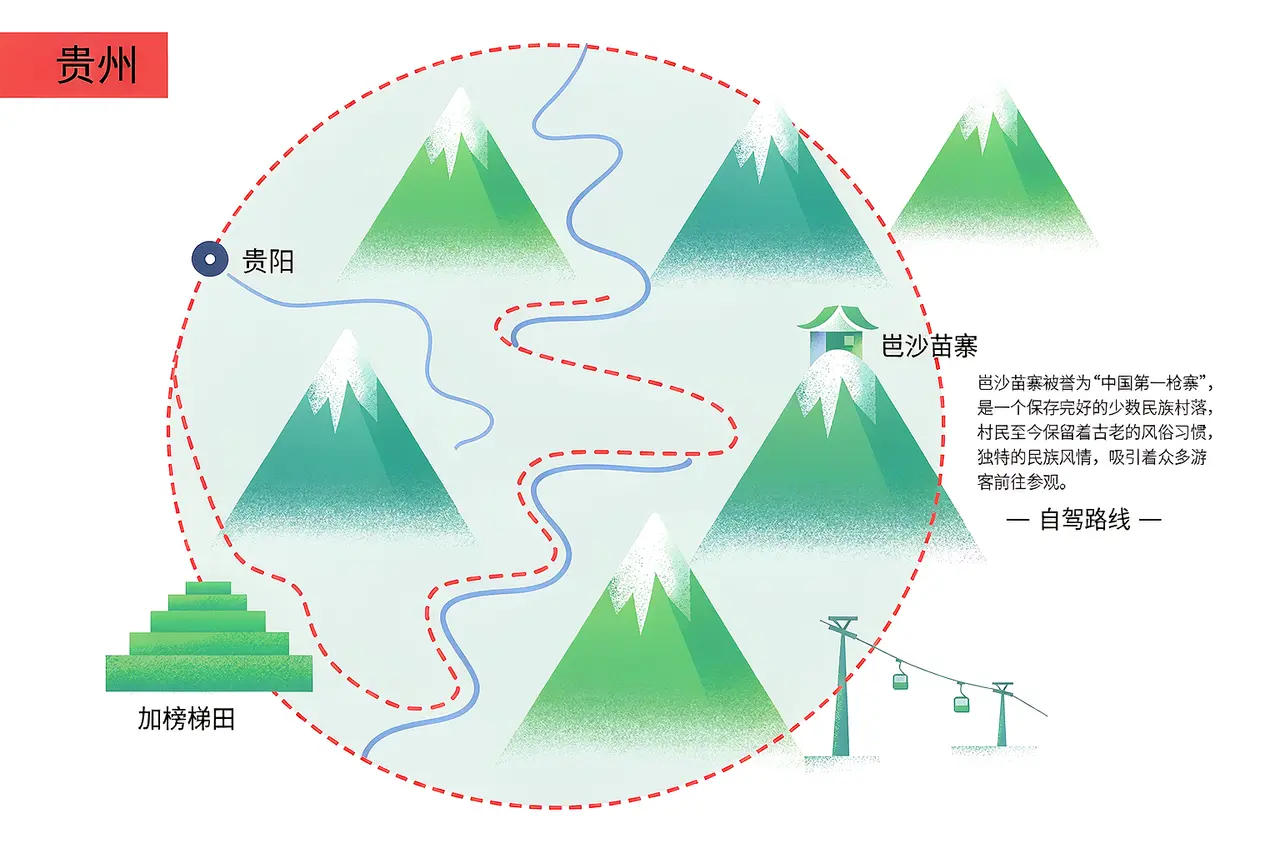
Guizhou spent years in the shadow of neighbours like Yunnan and Sichuan, but a 'Park Province' (公园省) branding push, cool summers around 23°C, roughly 60% forest cover and a string of viral grassroots sports events have flipped that. The cycling race is one pillar of a provincial strategy to turn sporting events into year-round tourism rather than one-off headlines.
The province's pitch is coherent: dramatic natural scenery, deeply living minority cultures, and a climate that is a relief from the heat of eastern China in July and August. For international visitors who already plan Chengdu pandas or Guilin karst, Guizhou slots in as the greener, less crowded connective tissue between them.
What to see: Guizhou's headline sights
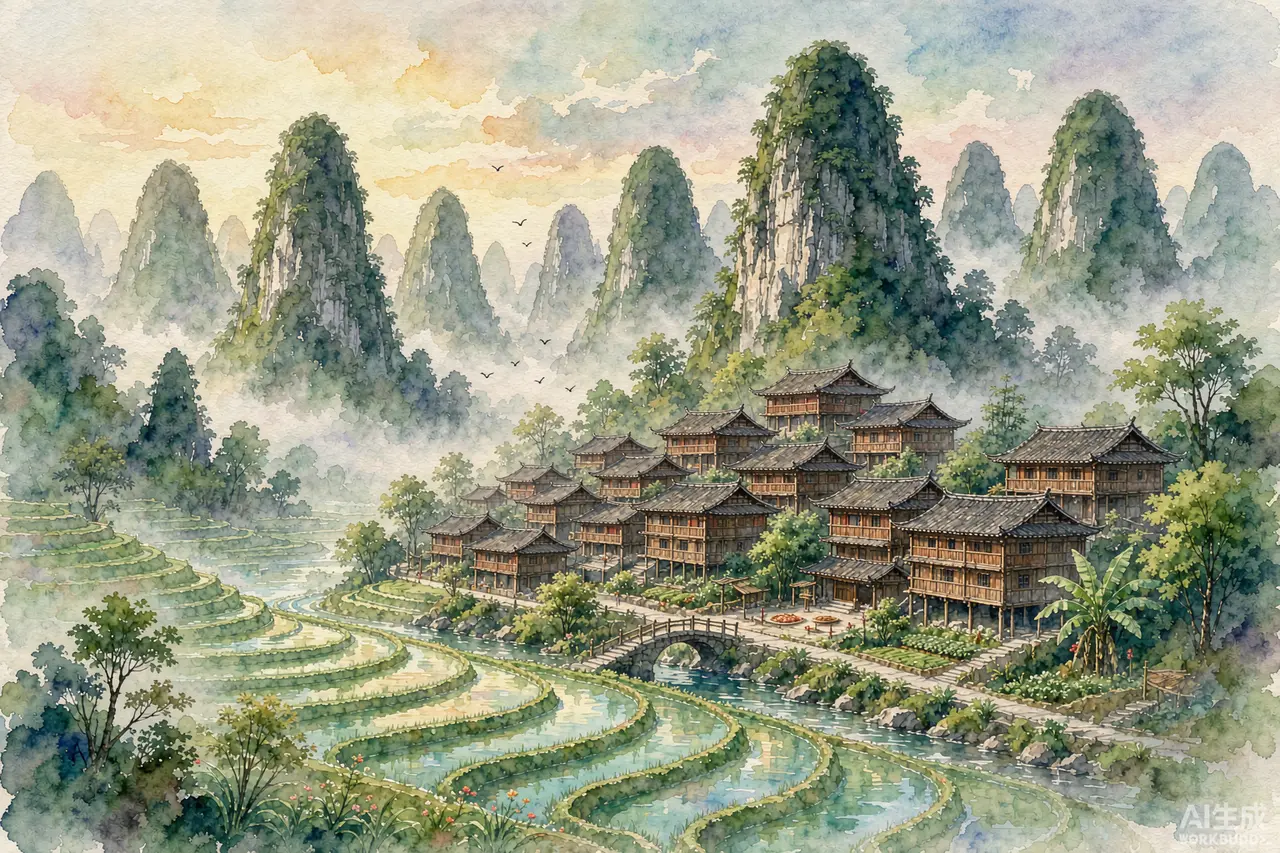
Guizhou's headline sights mix raw karst geology with living minority culture. The standouts are Huangguoshu Waterfall, the Fanjing Mountain UNESCO site, the vast Xijiang Miao Village, the karst streams of Libo, revolutionary Zunyi, the Qingyan ancient town and the FAST radio telescope in Pingtang.
- Huangguoshu Waterfall - China's largest waterfall by broad measure and the province's most famous natural sight, with walkways behind the curtain.
- Fanjing Mountain (Mount Fanjing) - a UNESCO World Heritage Site and sacred Buddhist peak known for its mushroom-rock summit and sea of clouds.
- Xijiang Qianhu Miao Village - the world's largest Miao (Hmong) village, a hillside lattice of stilted wooden homes and nightly performances.
- Libo Xiaoqikong - a 5A karst reserve of turquoise streams, waterfalls and the Seven Small Arches bridge.
- Zunyi - the city tied to the 1935 Red Army conference, a key stop on revolutionary-history routes.
- FAST (Five-hundred-meter Aperture Spherical Telescope) in Pingtang - the world's largest single-dish radio telescope, with a visitor centre nearby.
Guizhou food: sour, spicy and unlike standard Chinese food
Guizhou cuisine is its own world - sour and spicy rather than the sweet-and-sour or stir-fry templates foreigners expect. The signature is sour fish soup (酸汤鱼), backed by fish mint (折耳根), noodle dishes like Changwang mian, and rolled vegetable wraps called siwawa, reflecting Miao, Dong, Buyi and Yi influences.
- Sour fish soup (酸汤鱼) - the regional emblem, a tangy fermented tomato-and-chilli broth with river fish.
- Fish mint (折耳根 / Houttuynia) - a polarising herbal root used raw in salads and as a garnish.
- Changwang mian - Guiyang noodles with blood and intestine in a spicy broth.
- Siwawa - thin wrappers rolled around shredded vegetables and dips, a street-food staple.
- Ethnic minority cooking - Dong cured meat, Buyi baoba rice and Miao sour soups vary by village.
If you have food allergies or avoid offal, tell staff clearly and carry a translated note - Guizhou's sour and fermented dishes are flavourful but can be challenging for timid palates and are quite different from Cantonese or Sichuan styles.
Getting to and around Guizhou by high-speed rail
Guiyang North is a major high-speed-rail hub, which makes Guizhou an easy add-on to a China trip. Trains reach Guangzhou in about 4 hours, Chengdu in about 3, Chongqing in about 2, and Beijing or Shanghai in roughly 8 to 9 hours, while provincial rail links the prefectures the race crossed.
You can fly into Guiyang Longdongbao (KWE) from major Chinese cities, but the rail network is usually faster and cheaper from elsewhere in the country. Inside Guizhou, base in Guiyang and use high-speed trains plus buses to reach Huangguoshu, Kaili (for Xijiang), Tongren (for Fanjing) and Libo. Book seats ahead during summer and holiday peaks.
When to visit Guizhou
Time your trip around the weather: summer (June to August) is the peak cool-escape season with averages near 23°C, spring and autumn are mild and clear for hiking, and winter is gentle but wetter. The October race slot sits in a comfortable autumn window, which is why it doubles as a travel showcase.
If you want festivals, spring brings blooming terraces and minority new-year celebrations staggered across lunar dates, while summer is when the village basketball and football events draw the biggest crowds. Check the forecast closely - Guizhou is humid, and mountain roads need care after heavy rain.
Village basketball and the grassroots sports boom
Guizhou's other sporting claim to fame is Cunba (村BA), a village basketball league in Taijiang county that became a national internet hit, joined by the Cuncah (村超) football craze in Rongjiang. The Tour of Guizhou leaned into this by linking its Qiandongnan stage with Cunba events, blending elite sport with local festival energy.
These village events are free, loud and genuinely local - a rare chance to see rural Chinese community life rather than a staged show. For a traveler, catching a Cunba or Cuncah match is often more memorable than another photo at a scenic gate, and it fits the province's 'sport plus travel' identity perfectly.
Practical tips for visiting Guizhou
Base yourself in Guiyang and loop out by rail; book Cunba or Cuncah matches if your dates align; pack rain gear because the province is humid; and set up Alipay, WeChat Pay and a Chinese SIM or eSIM before you arrive, since rural signage and payment are less tourist-ready than the big cities.
- Use Guiyang as your hub and travel out by high-speed rail to each sight.
- Carry a translation app and some cash - smaller villages still prefer phone payments but not always foreign cards.
- Pack a light rain jacket and good walking shoes for wet karst trails.
- Book accommodation early in July-August and around the race or festival dates.
- Respect minority customs: ask before photographing villagers and ceremonial dress.
Guizhou is generally safe and welcoming. The main friction is logistics in rural areas, where English is rare - downloading offline maps and a translation app in advance removes most of it, and the high-speed rail keeps the big sights within a few hours of each other.
Frequently asked questions
Is Guizhou worth visiting for first-time China travelers?
Yes, especially if you want scenery and culture beyond the headline cities. Guizhou packs karst waterfalls, a UNESCO mountain, the world's largest Miao village and grassroots basketball phenomena into one cool, green province. It pairs well with Chengdu, Guangzhou or Guilin, all reachable by high-speed rail in a few hours.
How do I get to Guizhou?
Fly into Guiyang Longdongbao (KWE), or take high-speed rail to Guiyang North, a major hub. Trains reach Guangzhou in about 4 hours, Chengdu in about 3, Chongqing in about 2, and Beijing or Shanghai in roughly 8 to 9 hours. Within the province, rail and buses link the prefectures the race traversed.
What is Cunba (村BA) and can tourists watch it?
Cunba, or 'Village Basketball Association', is a grassroots basketball league in Taijiang county that became a national internet sensation for its village teams and carnival atmosphere. Matches are free to attend and visitors are welcome; the Tour of Guizhou even linked its Qiandongnan stage with Cunba events to share the crowd.
When is the best time to visit Guizhou?
Summer (June to August) is peak season because Guizhou stays around 23°C and escapes the heat of eastern China, making it a top cool-weather escape. Spring and autumn bring mild, clear days ideal for hiking and photography. Winter is mild but wetter, with some mountain roads needing care.
Is Guizhou safe and easy to get around?
Guizhou is generally safe and increasingly easy to navigate. Guiyang is the transport hub, and high-speed rail plus buses connect the prefectures. Rural minority villages are welcoming but have less English signage, so a translation app, Alipay or WeChat Pay, and a Chinese SIM or eSIM make the trip smoother.
Do I need a visa to visit Guizhou and China?
Guizhou follows China's national entry rules: in 2026, passport holders from 50 countries enter visa-free for 30 days, 57 nationalities use the 240-hour transit waiver, and others need a tourist (L) visa. The United States is not on the 30-day list, so most US visitors still apply for a visa.